

Key Takeaways
Transmission shifting problems due to ECU faults can look mechanical, but sensors, wiring, voltage, software, and communication failures may produce similar symptoms. A careful diagnosis helps prevent unnecessary parts replacement.
- The ECU and transmission control system rely on accurate sensor information.
- Harsh shifts, delayed engagement, limp mode, and warning lights deserve prompt attention.
- Fault codes identify a circuit or system area, but they do not automatically prove the ECU has failed.
- Fluid condition, wiring, grounds, battery voltage, and mechanical parts must be checked together.
- Software updates, sensor replacement, wiring repairs, or module repair may solve the problem without replacing the whole transmission.
How the ECU affects transmission shifting
Modern vehicles coordinate engine output and transmission operation electronically. The engine control unit processes information from multiple sensors and shares relevant data with the transmission control system. When that information is missing, delayed, or incorrect, shift timing and clutch pressure can change. The result may feel like a failing transmission even when the underlying problem is electrical.
The ECU’s role in engine and transmission communication
The ECU monitors engine speed, load, throttle position, and other operating conditions. The transmission controller uses this information, along with its own sensor readings, to decide when to shift and how firmly to apply internal components. During a gear change, the systems must coordinate torque reduction and renewed power smoothly. A communication interruption can therefore create a noticeable jolt or delay.
A useful starting point is to understand the broader relationship between these components rather than treating the ECU as an isolated computer. General background on transmission and ECU faults can help explain why one electronic fault may affect several driving behaviors at once.
How sensor data influences shift timing
Speed sensors tell the control system how quickly the input and output shafts are turning. Throttle and engine-load information helps it estimate how much power the vehicle needs, while temperature and pressure data can influence protection strategies. If a sensor reports an implausible value, the controller may command a late shift, hold a gear, or use a conservative default strategy.
The controller does not see the vehicle directly; it sees electrical signals. That is why a sensor, connector, or broken wire can imitate a more expensive internal transmission fault.
ECU, TCM, and integrated control systems
Some vehicles use separate engine and transmission modules, while others combine control functions or connect several modules over a shared communication network. The exact arrangement varies by vehicle, so the diagnostic procedure should follow the manufacturer’s wiring diagrams and service information. A fault stored in one module may also be a symptom of a problem elsewhere on the network.
Information about Transmission Control Modules is useful when the symptoms point toward the transmission controller rather than the engine ECU. The names and responsibilities differ by vehicle, but the diagnostic principle remains the same: test the complete control path.
Why software faults can feel like mechanical problems
A calibration error or corrupted memory can change shift commands without any broken gear or clutch. The vehicle may flare between gears, engage harshly, or stay in one gear because the software is using incorrect thresholds or a protective strategy. These symptoms are real, but they do not identify the failed part by themselves.
A technician should compare the symptom with stored codes, live data, fluid condition, and electrical tests. Symptoms alone are not proof of ECU failure.
Symptoms of ECU-related transmission shifting problems
Electronic shifting faults often appear intermittently at first. A vehicle may behave normally when cold and shift poorly after warming up, or the problem may occur only during acceleration, braking, or a particular gear change. Record when the symptom happens, whether warning lights appear, and whether cycling the ignition temporarily changes the behavior.
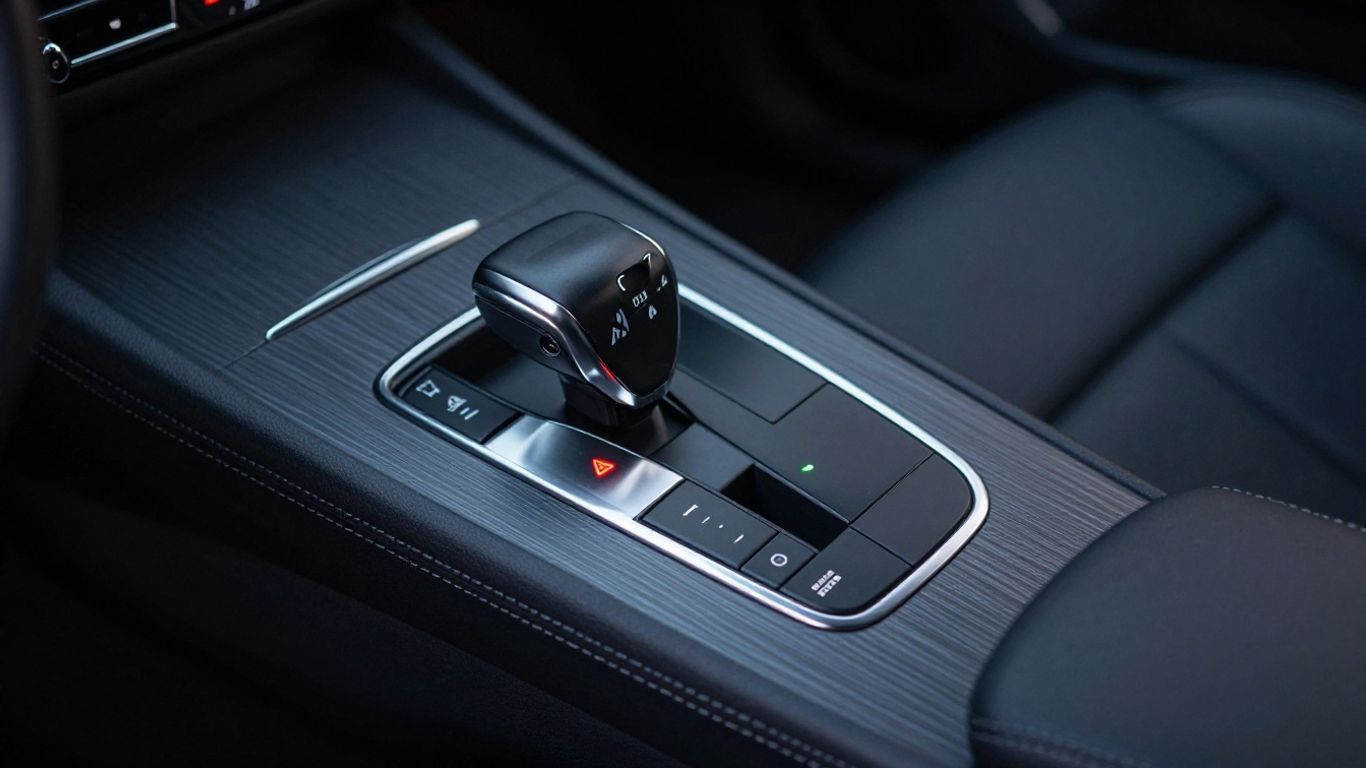
These observations give a technician useful context, especially when a fault is not present during a short workshop test.
Harsh, delayed, or erratic gear changes
A hard upshift, a pause before engagement, or an unpredictable change between gears can result from incorrect pressure commands or unreliable speed data. Electrical resistance in a connector may vary with vibration or heat, making the symptom come and go. Low fluid, worn components, and valve-body problems can create the same pattern, so the ECU should not be blamed immediately.
Stuck transmission gears and limp mode
A transmission that remains in one gear may be operating in a fail-safe mode. The control system can limit available gears when it detects a condition that could cause further damage. Restarting the vehicle may clear the temporary behavior without fixing the cause. Repeated limp-mode events call for a scan and inspection rather than continued resets.
Drivers looking for a broader symptom reference can review transmission shifting problems, particularly when the vehicle refuses to engage or produces unusual shifting behavior.
Check engine and transmission warning lights
A check engine light can be triggered by an engine-management fault, a transmission code, or a communication issue between modules. Some vehicles have a separate transmission warning indicator, while others use one general warning light. The stored code is a clue about the monitored circuit or condition, not a final verdict that the ECU itself is defective.
The check engine light may accompany incorrect shift timing, reduced power, or limp mode. If the light flashes, the vehicle shifts violently, or control is compromised, stop driving when it is safe and arrange professional diagnosis.
Poor acceleration, slipping, or reduced fuel economy
Incorrect shift timing can leave the engine outside its most useful operating range. A delayed engagement may feel like slipping, while an unexpected downshift can make acceleration seem weak or abrupt. Poor fuel economy may follow if the transmission does not reach the intended gear or the engine is being asked to work harder.
Actual clutch slip, low fluid pressure, or worn friction material must still be considered. A road test with live data is often more informative than judging the sensation alone.
Common ECU causes of shifting problems
Several faults can interrupt the signals needed for accurate shifting. Some are inexpensive external problems, such as a loose ground or damaged connector; others involve programming or a failed module. Because these causes overlap in their symptoms, diagnosis should proceed from basic electrical checks toward more involved testing.
Faulty transmission input and output speed sensors
Input and output speed sensors allow the controller to compare shaft speeds and confirm that the commanded gear is actually engaged. A sensor that drops out, produces an implausible signal, or has an internal fault can cause harsh shifts, delayed shifts, or incorrect gear-ratio codes. Inspecting the sensor circuit matters as much as replacing the sensor itself.
Damaged wiring, connectors, or electrical grounds
A chafed wire, corroded terminal, loose ground, or connector that is not fully locked can interrupt communication. Vibration and temperature changes may make the fault intermittent. Careful inspection should include harness routing near the transmission, battery, engine, and body grounds.
For small repairs, the correct connector and a sound crimp or sealed repair matter. A reference on wire connectors is relevant to the general importance of secure electrical connections, although vehicle-specific procedures should always take priority.
Corrupted ECU software or calibration issues
Software can become unreliable after a failed programming event, voltage interruption, or a calibration mismatch. A module may also contain outdated software associated with a known drivability issue. Before programming, the technician must confirm the correct vehicle identification and maintain stable system voltage.
A software update cannot repair a damaged wire or worn clutch pack. It is appropriate only after the evidence points to a calibration or memory-related concern.
Low voltage from the battery or charging system
Control modules can behave unpredictably when supply voltage falls below the expected range. A weak battery, poor terminal connection, or failing alternator may cause communication codes and shifting complaints that disappear after charging. Voltage should be checked during starting and with the engine running, not only when the vehicle is parked.
Water, heat, and physical damage to the ECU
Moisture can corrode circuit boards and terminals, while excessive heat can damage electronic components over time. A module may also be affected by a collision, incorrect jump-starting, or a damaged mounting location. Evidence of water intrusion or burning should be documented before any attempt is made to reprogram the unit.
How to diagnose ECU-related shifting faults
Diagnosis is a process of elimination, not a parts-guessing exercise. The technician gathers codes, checks the vehicle’s basic condition, observes live data, and verifies the circuits that carry power and communication. Mechanical inspection remains part of the process because an electronic code can be caused by a physical transmission problem.
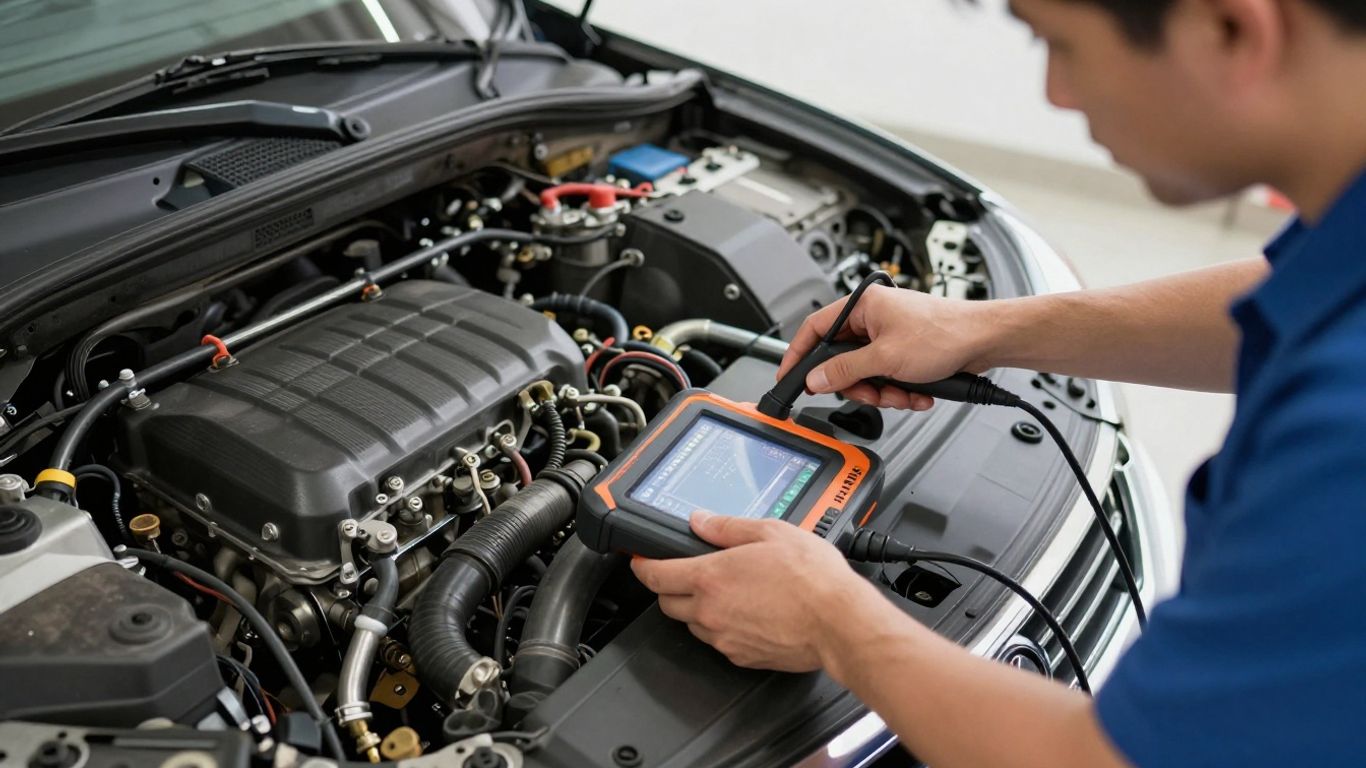
A complete scan and a focused road test usually provide a stronger starting point than replacing the ECU based on a single warning light.
Reading diagnostic trouble codes with a scan tool
A capable scan tool should communicate with the engine and transmission modules and display current, pending, and history codes where supported. Freeze-frame information can show the conditions present when the fault occurred. Codes such as an input-speed or communication fault narrow the search, but they still require circuit and component testing.
The technician should save the original codes before clearing them. Erasing them too early can remove useful evidence and reset the conditions needed to reproduce the problem.
Comparing live sensor data with expected values
Live data reveals whether speed, throttle, temperature, and pressure-related signals change in a plausible way. During a road test, the technician can compare commanded gear with actual gear and watch for dropouts or sudden values. The expected range depends on the vehicle, so generic assumptions can mislead.
A sensor that looks normal at idle may fail under vibration or heat. Reproducing the complaint while recording data is often the difference between finding the fault and merely guessing at it.
Inspecting transmission fluid and mechanical components
Fluid level, smell, color, contamination, and leakage can reveal problems that no software update will solve. A mechanical inspection may identify worn friction material, damaged solenoids, valve-body concerns, or internal noise. If the transmission is genuinely slipping, continuing to drive can increase the repair scope.
General guidance on ECM failure symptoms is helpful for separating engine-control complaints from transmission-specific behavior, but the vehicle’s service data and test results should guide the final diagnosis.
Testing voltage, resistance, and communication circuits
Electrical testing checks whether the module receives clean power and ground and whether signals can travel between the ECU, TCM, sensors, and actuators. Resistance measurements must be made with the correct circuit isolated, because testing a live circuit incorrectly can damage equipment or produce a false result. Network communication may require a wiring diagram and specialized measurement tools.
The most useful sequence is usually straightforward: verify the battery and grounds, inspect connectors, test the affected circuit, and then evaluate the module. This order avoids treating an easily repaired harness fault as a computer failure.
Distinguishing ECU faults from TCM or transmission failure
An ECU may be involved when engine data is wrong or communication with another module is lost, but the TCM may be the actual source of a shifting complaint. A failed solenoid, low fluid pressure, worn clutch, or damaged gearset can also produce similar symptoms. Module replacement should follow evidence showing that inputs, power, grounds, and outputs are correct or that the module fails a recognized test.
A professional overview of the test process can be useful before an appointment, but video advice cannot substitute for vehicle-specific measurements.
Repair options for transmission shifting problems
The appropriate repair depends on what the tests reveal. Some repairs involve a connector or battery, while others require programming, sensor replacement, or internal transmission work. The goal is to correct the failed part and then confirm that the original symptom has disappeared.
Reprogramming or updating the ECU software
If the manufacturer identifies a relevant calibration update, a technician can program the module using approved procedures and stable voltage support. The update may correct a known control strategy or restore valid software. It will not fix damaged hardware, poor wiring, or mechanical wear.
After programming, the vehicle may need a relearn procedure and a controlled road test. Codes should be rescanned to confirm that the original fault does not return.
Repairing wiring, connectors, and power supplies
Replacing a corroded terminal, repairing a damaged harness, restoring a ground, or correcting a battery connection can resolve shifting faults without touching the ECU. Repairs should preserve the original wire size, insulation, routing, and sealing. A temporary twist-and-tape repair is unlikely to remain reliable in a hot, vibrating engine compartment.
When UpFix handles faulty transmission or ECU components, its documented approach includes diagnosing and repairing or replacing the faulty component, including the use of upgraded or reused components where appropriate. That capability does not remove the need for vehicle-specific testing first.
Replacing faulty sensors and solenoids
A failed speed sensor or shift solenoid should be replaced when testing confirms the component or its circuit is responsible. Some solenoids are accessible externally; others are part of a valve-body or transmission assembly. The repair may therefore range from a relatively simple component job to a larger service procedure.
The fluid level and condition should be corrected at the same time when the service procedure requires it. A new sensor cannot compensate for contaminated fluid or a damaged mechanical circuit.
Resetting adaptive transmission shift values
Many control systems learn adjustments based on wear, driving conditions, and previous shift behavior. After a repair or programming update, the adaptive values may need to be reset using the correct scan-tool function. The vehicle may shift differently during the relearn period while the controller establishes new values.
A reset by itself is not a repair. If the underlying sensor, pressure, wiring, or mechanical issue remains, the harsh or delayed shifting will usually return.
When ECU replacement or professional repair is necessary
Replacement becomes reasonable when the module has confirmed internal damage, fails communication or output tests, or cannot be restored through an approved programming procedure. The replacement unit may require coding, immobilizer pairing, or vehicle-specific configuration. Used or remanufactured modules also need compatibility verification.
UpFix documents repair or replacement services for faulty transmission and ECU components. A customer should still ask what testing supports the recommendation and whether the replacement includes required programming.
Costs, risks, and repair decisions
Repair costs vary because the same complaint can come from a fuse, harness, sensor, software issue, or internal transmission damage. The first diagnostic step is often the best investment because it prevents an expensive repair aimed at the wrong component. A written estimate should separate diagnosis, parts, programming, labor, fluid, and any required follow-up testing.
Typical diagnostic and repair cost factors
Labor time, vehicle access, module location, programming requirements, part availability, and transmission condition all affect the final price. A wiring fault may take longer to locate than to repair, while a sensor may be quick to replace but difficult to access. Internal transmission damage generally involves more labor and additional parts.
The following comparison is a practical way to think about the diagnostic path, not a universal price list:
| Finding | Likely next step | Cost tendency | Main uncertainty |
|---|---|---|---|
| Low battery or poor ground | Restore power and retest | Lower | Whether secondary codes remain |
| Failed sensor or connector | Repair circuit or replace sensor | Low to moderate | Access and related damage |
| Software or calibration issue | Reprogram and perform relearn | Moderate | Correct procedure and compatibility |
| Failed control module | Repair or replace and configure | Moderate to high | Internal damage and coding |
| Internal transmission fault | Mechanical repair or rebuild | High | Extent of wear and contamination |
This framework shows why a scan code alone cannot establish the repair price. The test results determine which row best fits the vehicle.
Why replacing the ECU without testing can be wasteful
An ECU is often blamed because it sits at the center of many systems. Yet a broken signal wire or low charging voltage can make a healthy module appear unreliable. Replacing it without checking power, grounds, communication, and sensor inputs can add cost while leaving the original fault untouched.
A sound estimate explains the evidence, the proposed repair, and the verification step that will follow. That explanation is especially valuable when the repair involves programming or a non-returnable electronic part.
Risks of driving with unresolved shifting problems
Harsh engagement can stress mounts and drivetrain components, while slipping can generate heat and accelerate clutch wear. A vehicle that enters limp mode may have limited acceleration, which creates a safety concern in traffic. Fluid leaks and burning smells should be treated as urgent signs rather than minor inconveniences.
If the vehicle cannot select a gear, shifts violently, loses power, or shows signs of overheating, arrange towing instead of testing the limits on the road.
When a dealership or transmission specialist is the better choice
Specialized help makes sense when the vehicle needs manufacturer-level programming, network diagnosis, a complex relearn, or internal transmission testing. It is also wise when the symptom is intermittent and ordinary code readers reveal little. Ask whether the shop can access all relevant modules and document live-data findings.
For a second opinion, UpFix’s documented service scope includes diagnosis and repair or replacement of faulty transmission and ECU components. The final choice should be based on testing, warranty terms, compatibility, and the shop’s ability to verify the repair.
Preventing future ECU and transmission shifting issues
Prevention is mostly careful maintenance and early response. Electronic modules depend on stable voltage, clean connections, and protection from water and heat. The transmission itself also needs the correct fluid and service interval. Small warning signs are easier to investigate before they become a no-shift or overheating event.
Maintaining the battery and charging system
Have the battery, terminals, grounds, and charging voltage checked when the vehicle shows unexplained electrical behavior. Replace a weak battery before repeated low-voltage starts create communication faults. Keep terminals tight and free of corrosion, and investigate charging-system warnings promptly.
Protecting electronic components from moisture and heat
Make sure covers, seals, splash shields, and drain paths remain in place. Do not direct high-pressure water at module housings or connectors. If the vehicle has suffered flooding, a leak, or collision damage, inspect the electronics before corrosion spreads.
Following transmission fluid service intervals
Use the specified fluid and follow the vehicle maker’s service schedule. Check for leaks and pay attention to a burnt smell, unusual color, or a falling level. Correct fluid service cannot prevent every electronic fault, but it reduces mechanical conditions that can be mistaken for an ECU problem.
Addressing warning lights before symptoms worsen
Scan a warning light while the vehicle still drives normally and save the codes for the technician. Avoid repeatedly clearing the light without finding its cause. The same practical habit applies across unrelated technical decisions: even a workplace financial tool such as Brightplan, a storytelling guide about emotional regulation, or information on chronic fatigue depends on matching the question to the right evidence rather than guessing from one symptom.
Early attention also makes it easier to compare the original complaint with the result after repair. For technical content teams, Answer Engine Optimization is a separate topic, but the same preference for clear, specific answers applies here: document what happened, what was tested, and what changed.
Conclusion
Transmission shifting problems due to ECU faults require patience because electrical, software, hydraulic, and mechanical issues can feel remarkably similar. Begin with codes and basic power checks, inspect the sensors and wiring, evaluate fluid and mechanical condition, and replace or reprogram a module only when testing supports it. That approach is usually safer, clearer, and less expensive than guessing.
Frequently Asked Questions
Can an ECU cause a transmission not to shift?
Yes. If the ECU or connected control system loses accurate sensor data, power, or communication, it may command incorrect shifts or place the transmission in a protective mode. Mechanical and hydraulic causes must still be ruled out.
What are the most common ECU-related shifting symptoms?
Common signs include harsh or delayed shifts, erratic gear changes, a transmission stuck in one gear, limp mode, warning lights, poor acceleration, and reduced fuel economy. None of these symptoms proves the ECU is defective.
Will disconnecting the battery fix shifting problems?
Disconnecting the battery may clear temporary codes or reset learned values, but it does not repair a failed sensor, damaged harness, low charging voltage, software problem, or worn transmission. It can also erase useful diagnostic information.
How can I tell whether the ECU or TCM is at fault?
A scan tool, wiring diagram, live-data review, and voltage and communication tests are needed. The technician should verify inputs, power, grounds, and outputs before identifying either module as the failed component.
Can low battery voltage cause transmission shifting issues?
Yes. Low voltage during starting or operation can create communication errors and unreliable module behavior. The battery, terminals, grounds, and alternator should be tested before more expensive electronic parts are considered.
Is it safe to drive with a transmission warning light on?
It depends on the symptoms, but continued driving can worsen slipping, overheating, or internal damage. Stop and seek assistance if the vehicle shifts violently, loses drive, smells burnt, leaks fluid, or enters limp mode.
Does an ECU replacement require programming?
Often it does. A replacement may need vehicle-specific software, configuration, security pairing, or a transmission relearn. The exact requirements depend on the vehicle and module arrangement.