

Key Takeaways
A faulty ECU can create symptoms that look like ordinary engine, battery, sensor, or transmission problems. Careful testing matters more than replacing the computer based on one warning light.
- An ECU processes sensor information and helps control fuel, ignition, throttle, emissions, and related systems.
- Common warning signs include stalling, misfires, poor fuel economy, limp mode, starting trouble, and scan-tool communication failures.
- Water, corrosion, voltage problems, heat, vibration, damaged wiring, and interrupted programming can cause ECU trouble.
- Battery, ground, connector, fuse, sensor, and harness checks should come before condemning the ECU.
- Repair, reprogramming, or replacement depends on the actual failure, vehicle security system, and module compatibility.
What an ECU module does and why it matters
The engine control unit is one of the vehicle’s central electronic computers. It receives information from sensors, processes that information through programmed logic, and sends commands to systems that affect how the engine runs. Because several systems depend on shared signals and communication networks, one ECU problem can produce a surprisingly broad set of symptoms.
How the ECU controls engine performance
The ECU uses inputs such as engine speed, temperature, air measurement, throttle position, and oxygen content to calculate appropriate operating commands. It may adjust injector operation, ignition timing, idle control, throttle response, and emissions-related functions as conditions change. A useful ECU operation guide explains the same basic relationship: sensor data is processed so the computer can regulate fuel use and ignition activity.
The computer does not create mechanical compression or fuel pressure by itself. Instead, it coordinates electrically controlled components and responds to changing conditions many times per second. If an input is inaccurate, a power supply is unstable, or an output circuit is damaged, the engine may run poorly even when the mechanical parts are sound.
The difference between an ECU, ECM, and PCM
ECU is a broad term for an electronic control unit, while ECM usually means engine control module. PCM commonly refers to a powertrain control module that may manage both engine and transmission functions. Manufacturers and repair shops do not always use these labels in exactly the same way, so the name printed in a service manual or scan-tool menu is more useful than the abbreviation alone.
A vehicle can also contain separate modules for the transmission, body electronics, restraint system, and anti-theft system. They communicate over vehicle networks, which means a problem outside the engine computer can sometimes prevent normal communication. The module’s location, connector arrangement, software, and security coding all matter when testing or replacing it.
How software, sensors, and wiring work together
The ECU can only make sensible decisions when its power, ground, software, sensor inputs, and output circuits are reliable. A broken wire may look like a failed sensor; a shorted actuator circuit may damage a driver inside the computer; and interrupted programming may leave the module unable to operate correctly. The ECU failure causes guide also places water damage, faulty sensors, and corrupted software among the practical areas worth checking.
This is why a diagnostic code is a clue rather than a final verdict. The code may identify a circuit, signal, or communication condition without proving which physical component created it. Testing the circuit around the code helps separate a module fault from a wiring or component fault.
Why ECU problems can resemble other vehicle faults
A poor connection at the battery, a failing relay, low fuel pressure, a worn ignition coil, or a damaged ground can all produce symptoms that resemble ECU failure. Several unrelated codes appearing together can raise suspicion, but they can also result from low voltage or a network interruption. A complete circuit check is usually more informative than a parts swap.
The engine computer diagnosis guide recommends checking related components such as ignition parts, relays, injectors, and sensors before replacing an ECU. That approach is sensible for most vehicles because the computer is often blamed for faults that originate elsewhere.
10 common symptoms of a faulty ECU module
The symptoms of a faulty ECU module are not always dramatic. Some vehicles fail to start at all, while others continue to drive with occasional hesitation, inconsistent warnings, or an unusual collection of unrelated codes. Treat these signs as reasons to investigate, not as proof that the ECU itself has failed.
Check engine light and other dashboard warnings
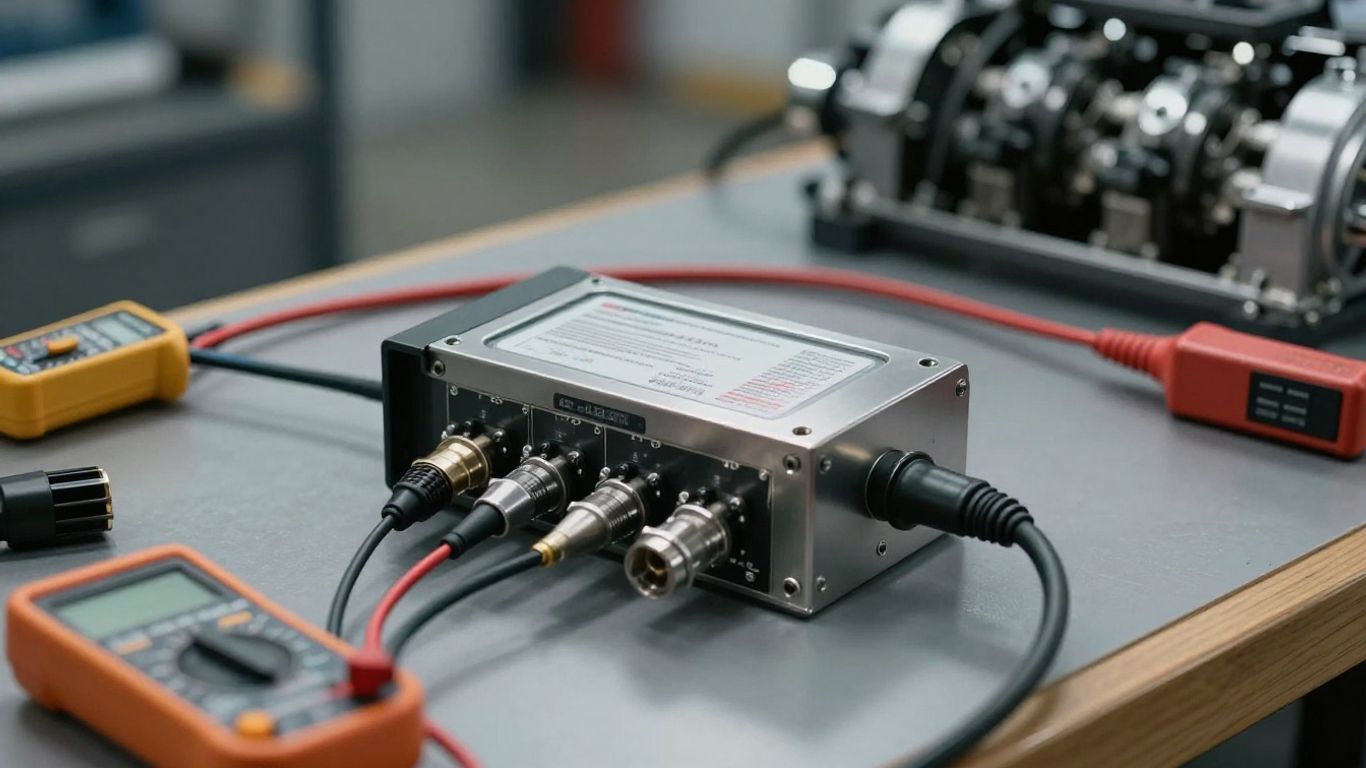
A check engine light is one of the most familiar signs of an engine-management problem, but it can be triggered by dozens of conditions. An ECU-related fault becomes more plausible when the light returns after a verified repair, several systems report communication errors, or the stored codes do not fit the vehicle’s actual behavior. Other warning lamps may appear when modules lose network communication or system voltage drops.
Engine misfires, rough idling, or stalling
Incorrect commands or unreliable sensor information can disturb fuel delivery, ignition timing, or idle control. The result may be a shaking idle, repeated misfire, hesitation, or an engine that stalls when coming to a stop. Yet ignition coils, spark plugs, injectors, vacuum leaks, and crankshaft sensors can create the same pattern, so a misfire alone does not condemn the ECU.
Difficulty starting or an engine that will not start
An engine may crank normally but fail to start if fuel injection, spark control, or the required engine-speed signal is missing. Intermittent starting can be especially confusing: the vehicle works after cooling down, moving a harness, or trying the key again. Before testing the ECU, confirm battery voltage, starter speed, fuel pressure, spark, and the relevant security-system status.
Poor fuel economy and changes in engine performance
A faulty input or incorrect processing can make the mixture too rich or too lean, alter throttle behavior, or cause the engine to remain in a protective operating strategy. Drivers may notice increased fuel use, sluggish response, unusual surging, or a change in idle quality. Exhaust leaks and failing oxygen or air-measurement sensors can produce similar economy changes.
Weak acceleration, hesitation, or limp mode
Limp mode limits performance when the vehicle detects a condition that could damage the engine or powertrain. A throttle fault, transmission issue, boost problem, or communication error may trigger it, as can an ECU that cannot correctly interpret or control a system. Repeated limp mode should be diagnosed promptly rather than cleared repeatedly.
Transmission shifting problems linked to ECU communication
Harsh shifts, delayed engagement, incorrect gear selection, or a transmission warning may occur when the engine and transmission modules exchange incomplete or implausible data. The transmission itself may still be mechanically healthy. Network wiring, module power supplies, and connector integrity should be checked before assuming the ECU is the source.
Electrical accessories behaving unpredictably
An engine ECU does not directly control every accessory, but vehicle modules share power and communication circuits. A low-voltage event or network fault can therefore appear alongside strange gauge readings, warning lamps, or intermittent accessory behavior. If several unrelated electrical symptoms began at once, inspect the charging system and grounds early in the process.
Emissions test failure and unusual exhaust readings
An ECU problem can affect the commands and monitoring used for emissions control. A failed readiness monitor, repeated mixture code, or unusual emissions result may point toward an engine-management issue. Still, catalytic converters, exhaust leaks, fuel vapor controls, and ordinary sensor failures remain common alternatives.
Intermittent problems that disappear and return
Heat, vibration, moisture, and movement can change the behavior of a cracked solder joint, corroded terminal, or failing electronic component. The vehicle may run normally during a workshop inspection and fail later on the road. Recording when the symptom occurs—cold or hot, wet or dry, stationary or moving—can provide valuable diagnostic direction.
No communication with a diagnostic scan tool
A scan tool that cannot communicate with the ECU may indicate a dead module, but it can also point to a blown fuse, missing power or ground, a damaged data line, an incompatible tool connection, or another module holding the network down. Communication testing should begin at the diagnostic connector and module power circuits, not with immediate replacement.
What causes an ECU module to fail
ECUs are designed for a demanding environment, but they are not immune to moisture, heat, electrical abuse, or physical damage. Failure may be sudden, or it may develop gradually as terminals corrode and electronic components weaken. Finding the cause is essential, because a replacement module can fail again if the original problem remains.
Water intrusion, corrosion, and damaged connectors
Leaks from the windshield area, cabin drains, seals, or engine-bay covers can expose a module to moisture. Water promotes corrosion and may create short circuits between terminals. Bent pins, loose locks, green corrosion, and damp insulation deserve close attention before any programming or replacement decision.
Voltage spikes, battery problems, and jump-start errors
A weak battery can create low-voltage conditions during cranking, while an incorrect jump-start can expose sensitive electronics to damaging polarity or voltage. Charging-system faults and poor battery connections can also cause multiple modules to reset or lose communication. The ECU warning signs reference likewise treats starting trouble, stalling, misfires, and transmission symptoms as clues that require broader diagnosis.
A few basic electrical checks often reveal useful patterns:
- Measure battery voltage before starting and during cranking.
- Check alternator output and inspect both battery terminals.
- Verify module grounds with a voltage-drop test under load.
- Confirm that the correct fuses and relays receive power.
These checks do not prove that the ECU is healthy, but they can prevent a good module from being misdiagnosed. They should be performed before programming a replacement or sending a unit for repair.
Overheating and long-term vibration exposure
Repeated heat cycles can weaken internal solder joints and electronic components, particularly when a module is mounted near a hot engine area. Vibration may worsen an existing crack or damage a connector over time. Signs of heat discoloration, a failed cooling shield, or a loose mounting point can help explain an otherwise intermittent fault.
Faulty sensors, actuators, or wiring harnesses
A shorted sensor or actuator can overload an ECU output circuit. Harnesses may also chafe against brackets, become oil-soaked, or suffer rodent damage. Testing resistance, continuity, and circuit isolation is safer than replacing the computer simply because a sensor code is stored.
Software corruption and failed programming
Software can become unusable if programming is interrupted, the wrong file is selected, or vehicle voltage falls during a programming session. Symptoms may include no communication, memory or checksum errors, a crank-no-start condition, or a module that cannot complete its initialization. Programming should follow the vehicle manufacturer’s specified procedure and power-support requirements.
How to diagnose ECU-related symptoms
Diagnosis works best as a process of elimination. Begin with the complaint and the conditions under which it occurs, then verify basic electrical and mechanical requirements before interpreting advanced data. A professional report should explain what was tested, what passed, and why the ECU remains the most likely cause.
Reading diagnostic trouble codes correctly
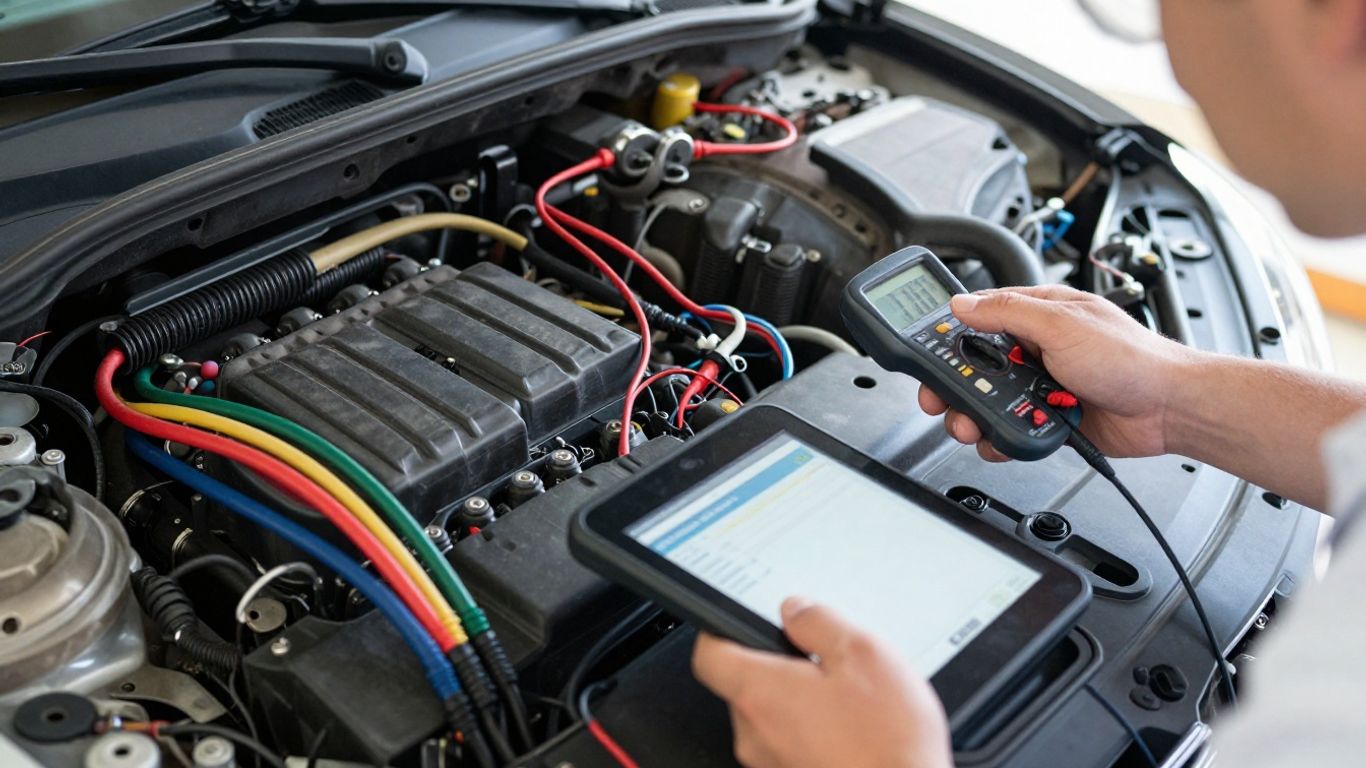
Record all codes, including pending and communication codes, before clearing anything. Note whether they appeared together, whether they return immediately, and whether freeze-frame information matches the reported symptom. A code naming an injector, sensor, or network circuit usually identifies an area for testing rather than naming the failed part.
Checking battery voltage, grounds, and power supplies
The ECU needs stable voltage and clean grounds during starting and operation. Test the battery under load, inspect charging voltage, and perform voltage-drop checks on power and ground paths. A fuse that looks intact can still have no supply on one side, so test circuits rather than relying on visual inspection alone.
Inspecting connectors, fuses, and harness damage
Disconnect connectors only when the correct safety procedure allows it, then look for moisture, pushed-back terminals, corrosion, bent pins, and signs of overheating. Follow the harness far enough to find chafing or tension near brackets. Wiring diagrams and pin-specific tests are far more reliable than guessing from connector appearance.
Comparing live sensor data with manufacturer specifications
Live data can show whether the ECU is receiving plausible information while the engine runs. Compare readings with the manufacturer’s specifications and with related signals, such as engine speed versus camshaft position or throttle position versus commanded opening. A value that changes logically may shift suspicion toward a mechanical or fuel problem rather than the computer.
A simple symptom-to-check framework can keep the investigation organized:
| Symptom or finding | First checks | What it may suggest |
|---|---|---|
| Crank-no-start | Battery, spark, fuel, security status | Missing input, relay fault, fuel or ignition issue |
| Multiple unrelated codes | Power, grounds, network lines | Low voltage or communication fault |
| Rough running | Misfire data, coils, injectors, sensors | Engine component or control problem |
| No scan communication | Diagnostic connector, fuses, module power | Wiring, network, or module failure |
The table is only a starting point, not a substitute for the wiring diagram and service data for the specific vehicle. Testing the most basic causes first usually reduces both diagnostic time and unnecessary parts expense.
Confirming whether the ECU or another component is at fault
An ECU should be considered the cause only after its power, grounds, inputs, outputs, communication lines, and related components have been tested. A bench test or specialist inspection may help when the vehicle-side circuits are verified. If the module passes testing, return attention to sensors, actuators, wiring, fuel, ignition, and mechanical timing.
ECU problems that can mimic other vehicle issues
The computer is connected to many systems, so symptoms can overlap. A disciplined diagnosis asks whether the ECU is failing to process information, whether it is receiving bad information, or whether another system is creating the symptom independently. That distinction prevents expensive and unnecessary module replacement.
Distinguishing ECU faults from a weak battery or alternator
Low system voltage can cause warning lights, hard starting, erratic idle, transmission complaints, and lost scan-tool communication. Measure voltage during the actual event, not only after the vehicle starts. If the battery or alternator is unstable, repair that fault and then check whether the ECU symptoms remain.
Separating bad sensors from ECU processing errors
A sensor may send a fixed, implausible, or intermittent signal while the ECU continues to process everything else correctly. Compare the sensor’s reference voltage, ground, signal, and live-data response. If the wiring and sensor output are correct but the ECU displays or reacts to the information incorrectly, suspicion of the module becomes stronger.
Telling fuel delivery and ignition faults apart
Fuel-pressure testing, injector pulse testing, and spark testing help divide a no-start or misfire complaint into useful paths. A failed pump, relay, injector, coil, or plug can feel like an ECU problem because the computer controls or monitors those circuits. Testing for the actual command and the component’s response is more conclusive than relying on the symptom’s appearance.
Identifying transmission issues caused by communication failures
A transmission complaint may originate with its own sensors, solenoids, fluid condition, or internal hardware. It may also result from a lost message between modules. Scan all relevant modules, inspect network codes, and verify shared power and ground circuits before treating a harsh shift as proof of an engine ECU fault.
Understanding when a warning light does not indicate ECU failure
Warning lights report detected conditions, not necessarily failed computers. A check engine light may reflect an emissions leak, a loose fuel cap, a failed sensor, or a genuine control fault. The lamp should prompt testing, while the stored code, live data, and physical inspection determine the next step.
When to repair, reprogram, or replace the ECU module
The right remedy depends on whether the problem is software, an external circuit, or internal hardware. Cost, availability, vehicle age, security requirements, and the quality of the repair facility all matter. Do not order a replacement until the original module and the surrounding circuits have been evaluated.
Situations where software updates or reflashing may help
Reprogramming may help when the module has corrupted software, needs a manufacturer update, or requires configuration after a related repair. It will not fix a burned driver, corroded board, broken connector, or continuing voltage problem. Stable power support and the correct vehicle-specific software are essential during the procedure.
When professional ECU repair is a practical option
Repair can be reasonable when the module has a known internal electronic fault and its case, circuit board, and data remain recoverable. A specialist may bench-test the unit, identify damaged components, and verify operation before it returns to the vehicle. Ask what testing is included and whether the underlying vehicle-side fault must be corrected first.
Signs that replacement is more reliable than repair
Replacement may make more sense when the module has extensive water or fire damage, severe board corrosion, unavailable components, or repeated failures after a verified repair. The decision should be based on test results and total installed cost, not only the price of a used unit. A replacement is not complete until it communicates correctly and the vehicle operates normally.
Matching a replacement module to the vehicle
Part numbers, hardware versions, calibration files, engine and transmission combinations, and market specifications can all affect compatibility. A visually similar module may still be unsuitable. Confirm the vehicle identification information and required configuration with reliable service data before purchasing.
Immobilizer programming and key relearning requirements
Many vehicles require security initialization, immobilizer synchronization, or key relearning after an ECU change. Without the correct procedure, the engine may crank but not start, or the replacement may fail to communicate with other modules. The required programming should be confirmed before the old module is removed.
How to prevent future ECU module problems
Prevention is mostly careful maintenance and sound electrical work. The module should be protected from its environment, while the vehicle’s battery, charging system, wiring, and software procedures are kept within specification. Small faults are easier to correct before they damage an expensive electronic unit.
Protecting the module from moisture and extreme temperatures
Keep drains clear, repair cabin and engine-bay leaks, and make sure covers and seals are seated properly. Avoid directing high-pressure water at electrical enclosures. If moisture is found, disconnect power according to the vehicle’s safety instructions and have the area inspected rather than repeatedly powering a wet module.
Maintaining the battery and charging system
A healthy battery and charging system reduce low-voltage events during starting. Clean, tight terminals and reliable grounds matter just as much as battery capacity. Have the charging system checked when lights flicker, starting becomes slow, or several electronic warnings appear together.
Avoiding incorrect jump-starting and electrical modifications
Follow the vehicle’s specified jump-start procedure and verify polarity before connecting cables. Avoid improvised wiring, poorly protected accessories, and modifications that overload existing circuits. Electrical work near module power or network wiring should use the correct fusing and connection methods.
Repairing wiring and connector problems early
Replace damaged insulation, secure loose harnesses, and address corrosion before it spreads through a connector. Do not force terminals together or seal a wet connector without finding the source of the moisture. Early repairs protect both the harness and the components it supplies.
Following proper diagnostic and programming procedures
Use a suitable scan tool, accurate wiring information, and a stable power supply for programming. Save vehicle data and record codes before clearing them. If the diagnosis is uncertain, a qualified technician can test the module and vehicle circuits in a controlled sequence instead of relying on repeated resets.
For context, the unrelated pages water filtration components, Kiwi Sheepskins, Bundled, Nutrivance Laboratories, and Flash IPTV Nordic concern other products or services and should not be treated as automotive diagnostic resources.
Conclusion
ECU symptoms can be serious, but they are rarely diagnosed well by guessing from a single warning light. Check power, grounds, wiring, sensors, fuel, ignition, and communication circuits first, then choose repair, programming, or replacement based on evidence from the specific vehicle.
Frequently Asked Questions
What are the most common symptoms of a faulty ECU module?
Common signs include stalling, misfires, rough idling, hard starting, no-start conditions, poor fuel economy, limp mode, unexplained warning lights, shifting complaints, and loss of scan-tool communication.
Can a car run with a failing ECU?
Yes. An ECU can fail intermittently or lose only some functions, allowing the vehicle to run poorly or unpredictably. Other failures are more complete and cause a crank-no-start or communication problem.
Does a check engine light prove the ECU is bad?
No. The light can be triggered by a sensor, emissions component, wiring fault, fuel problem, ignition fault, or low voltage. The stored codes and follow-up tests are needed to identify the cause.
Can a weak battery cause ECU-like symptoms?
Yes. Low voltage during cranking or unstable charging voltage can create multiple warning lights, communication errors, hard starting, and erratic operation. Battery and charging checks should be early diagnostic steps.
Is ECU repair better than replacement?
Neither option is always better. Repair may suit a recoverable internal fault, while replacement may be preferable for severe physical damage or repeated failure. Compatibility and programming requirements must be included in the decision.
Does an ECU replacement need programming?
Often it does. Many vehicles require software configuration, immobilizer synchronization, key relearning, or communication setup after a module is installed. The exact requirements depend on the vehicle and module.
Can ECU problems be prevented?
Many avoidable failures relate to moisture, poor grounds, charging faults, incorrect jump-starting, damaged wiring, and interrupted programming. Maintaining those areas lowers risk, though it cannot prevent every electronic failure.