

Key Takeaways
An engine that stalls does not automatically need a replacement ECU. The fault may be in fuel delivery, ignition, air metering, wiring, or a sensor.
- Confirm the underlying fault before approving an ECU replacement.
- Scan results are clues, not proof that the computer has failed.
- Power, grounds, connectors, and communication circuits must be tested.
- Repairing or using a remanufactured ECU may cost less than buying new.
- Programming, immobilizer pairing, labor, and towing can change the final bill.
What can cause a car engine to stall
A stalled engine is a symptom rather than a diagnosis. The ECU controls many engine functions, but it depends on reliable fuel pressure, ignition, sensor signals, and electrical power. That is why the car engine stalling ECU replacement cost should be considered only after simpler causes have been checked.
Common fuel, ignition, and air-delivery problems
A weak fuel pump, restricted filter, failing relay, or low fuel pressure can make an engine shut off, especially under load. Ignition coils, spark plugs, and crankshaft position sensors can create similar symptoms when they lose their signal as the engine warms up. Air leaks, a dirty throttle body, or a malfunctioning mass-airflow sensor can also upset the mixture enough to cause a stall.
The timing of the problem provides useful direction. A stall during acceleration may suggest fuel delivery or ignition trouble, while a stall when coming to a stop can point toward idle control, a vacuum leak, or a throttle-related issue. These repairs are usually less costly than an ECU replacement, but they still require testing rather than guesswork.
How sensors and wiring can trigger stalling
Sensors send information to the ECU, and damaged wiring can make a healthy sensor appear defective. Corrosion in a connector, a loose ground, chafing near the engine, or water intrusion can interrupt a signal briefly and leave a driver with an intermittent stall. A technician should inspect the circuit and compare live data with expected readings.
A fault code naming a sensor does not necessarily mean the sensor itself is bad. The code may have been caused by an open circuit, a short, poor voltage supply, or a communication problem. ECM repair guidance is useful background on why professional testing matters when stalling and warning lights appear together.
When an ECU is actually responsible
An ECU becomes a stronger suspect when its power and grounds are correct, its wiring is intact, and multiple systems show unexplained communication or control failures. Internal water damage, failed components, or a persistent loss of communication can support that conclusion. Even then, the module should be tested against the vehicle’s service information before replacement.
A replacement computer may also need software configuration or security pairing. Installing a part that is not compatible with the vehicle can create a no-start condition, so the part number, calibration, and immobilizer requirements deserve attention. A new ECU decision guide can help frame the choice, but it cannot replace a vehicle-specific diagnosis.
Symptoms that point to a different repair
Some patterns point away from the ECU. A stall accompanied by a fuel-pressure drop, a single failed ignition coil, or a broken crank sensor signal usually calls for a component or circuit repair. Likewise, a vehicle that restarts after cooling down may have a heat-sensitive relay, sensor, or ignition part rather than a failed computer.
Record when the stall happens, whether the dashboard goes dark, whether the engine cranks afterward, and which warning lamps remain on. Those details can save diagnostic time and keep a broad symptom from turning into an expensive parts-swapping exercise.
How mechanics diagnose an ECU-related stalling problem
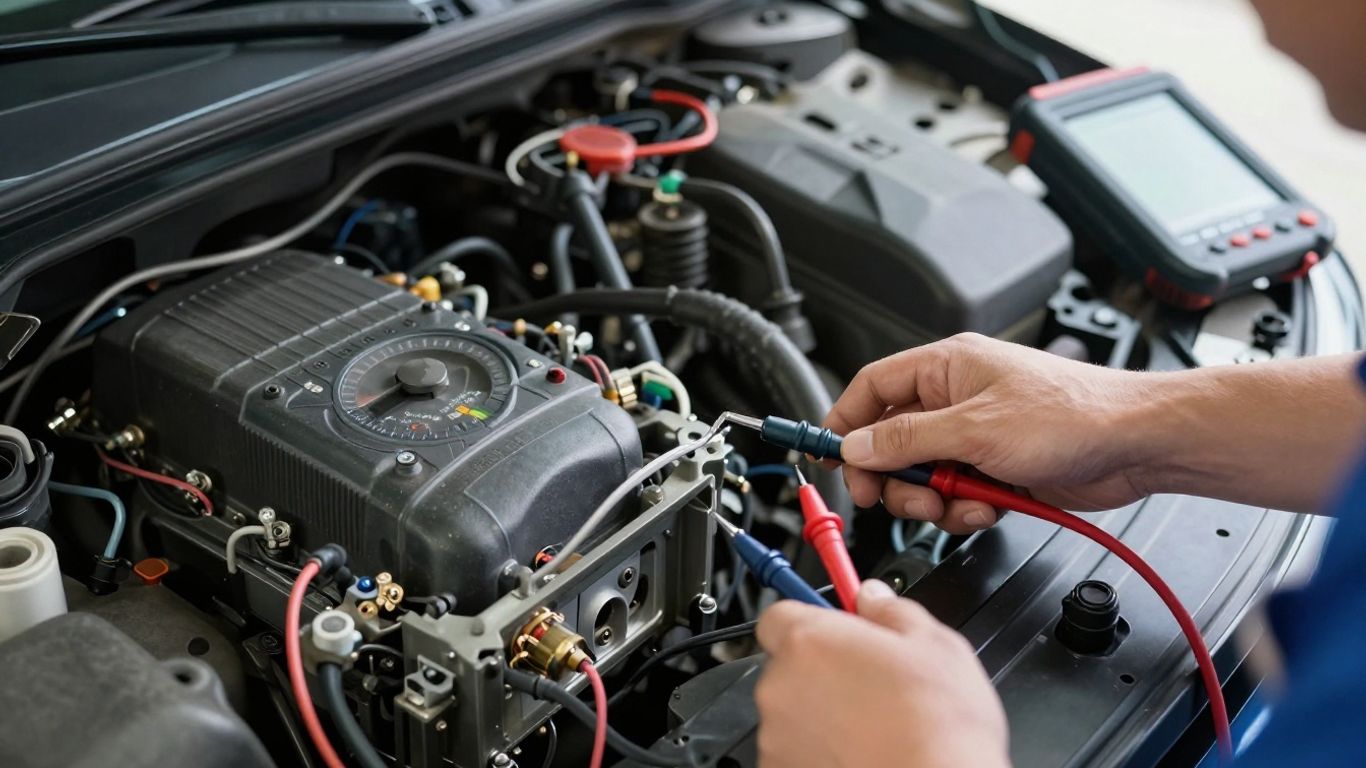
Diagnosis normally proceeds from basic electrical checks to more targeted testing. A mechanic may reproduce the stall, scan the vehicle, inspect live data, and verify the signals that the ECU needs to operate. The goal is to prove a failed module, not merely find a code associated with it.
Reading diagnostic trouble codes
A scan tool can reveal stored, pending, and communication-related diagnostic trouble codes. It can also show whether the failure is isolated to one circuit or appears across several modules. Codes help establish a direction, but they do not by themselves authorize an ECU replacement.
The technician should document freeze-frame information and check whether codes return after clearing them and operating the vehicle. A scan that shows no communication with the ECU is significant, but the scan tool, connector, fuse, and network wiring must all be checked before blaming the module.
Testing ECU power, grounds, and communication
The ECU cannot control the engine reliably if it lacks stable battery voltage, an ignition feed, or a clean ground. Technicians may use a wiring diagram, voltage-drop testing, and a lab scope to check these circuits under load. They also verify communication on the vehicle network when other modules cannot see the ECU.
A visual inspection alone can miss a ground that fails only during cranking or vibration. The test should account for the condition in which the stall occurs. A verified power supply is one of the basic facts needed before an expensive computer is condemned.
Inspecting sensors, connectors, and wiring harnesses
Next, the technician compares sensor signals with the engine’s actual condition. Crank and cam signals, throttle position, airflow, coolant temperature, and fuel-related data can all help explain an intermittent shutdown. Connectors should be checked for bent pins, moisture, spread terminals, and damaged locks.
The harness also needs attention around hot exhaust parts, moving brackets, and areas exposed to oil or road debris. If a signal disappears at the same moment the engine stalls, a scope or back-probing test can help distinguish a wiring fault from an ECU input failure.
Confirming the fault before replacing the ECU
A responsible diagnosis ends with a specific explanation: which circuit failed, what tests were performed, and why the ECU is the remaining cause. The technician should identify whether the proposed unit is new, repaired, remanufactured, or used, and explain what programming it requires.
For a broader cost comparison, ECU replacement pricing can provide a starting point, though a written estimate for the exact vehicle is more useful. A second opinion is sensible when the diagnosis rests only on a vague code or a visual suspicion.
Car engine stalling ECU replacement cost factors
The price is made up of more than the computer itself. Part sourcing, diagnostic time, installation, programming, and security pairing can each appear as separate line items. Two vehicles with the same symptom may therefore receive very different estimates.
New, remanufactured, used, and repaired ECU pricing
A new OEM ECU is usually the most expensive part option, while a used module may have the lowest purchase price. Remanufactured units can sit between those choices, but their testing standards, warranty terms, and programming arrangements vary. Repairing the original unit may be economical when the internal fault is known and the housing and circuit board are serviceable.
| ECU option | Potential advantage | Cost concern |
|---|---|---|
| New OEM | Correct specification and new components | Highest part price and possible programming fee |
| Remanufactured | Lower price with prior testing | Quality and warranty vary by supplier |
| Used | Often inexpensive and readily available | Compatibility, history, and pairing may be uncertain |
| Repair of original | Preserves the vehicle’s existing configuration | Not every internal failure is repairable |
The cheapest part is not always the cheapest installed solution. A used unit that needs extra coding or fails shortly afterward can cost more than a properly warranted remanufactured option. 2026 ECU repair costs offers another general reference for comparing repair and replacement categories.
Labor and diagnostic charges
The labor bill may include the initial scan, circuit testing, removal, installation, and a final road test. Some shops apply the diagnostic charge toward the repair, while others list it separately. Access is usually straightforward on some vehicles but difficult when the ECU sits behind trim, under a seat, or in a crowded engine compartment.
Ask whether the estimate includes diagnosis or only installation. A low installation quote can become much higher once testing, software setup, and a failed first part are added.
Vehicle make, model, and ECU location
Make and model affect parts availability, software requirements, and technician familiarity. A common mainstream vehicle may have several sourcing options, while an imported, luxury, or performance model can require a specialized module or dealer-level procedure. The physical location also affects removal time and the risk of discovering corrosion or water damage.
The relevant module may be called an ECU, ECM, or powertrain control module depending on the vehicle. Those terms are often used interchangeably in conversation, but the correct replacement depends on the manufacturer’s part number and system design.
Programming, coding, and immobilizer pairing costs
Many replacement ECUs need the vehicle identification number, calibration files, or immobilizer information programmed before the engine will run normally. Some remanufactured units arrive configured for a specific vehicle, while others require a shop to complete the procedure. The estimate should say who performs programming and what happens if the module will not communicate.
Ask whether keys, security modules, throttle calibration, or emissions-related relearns are included. These details can explain a sizeable difference between a part-only price and a finished repair.
Typical ECU replacement price ranges
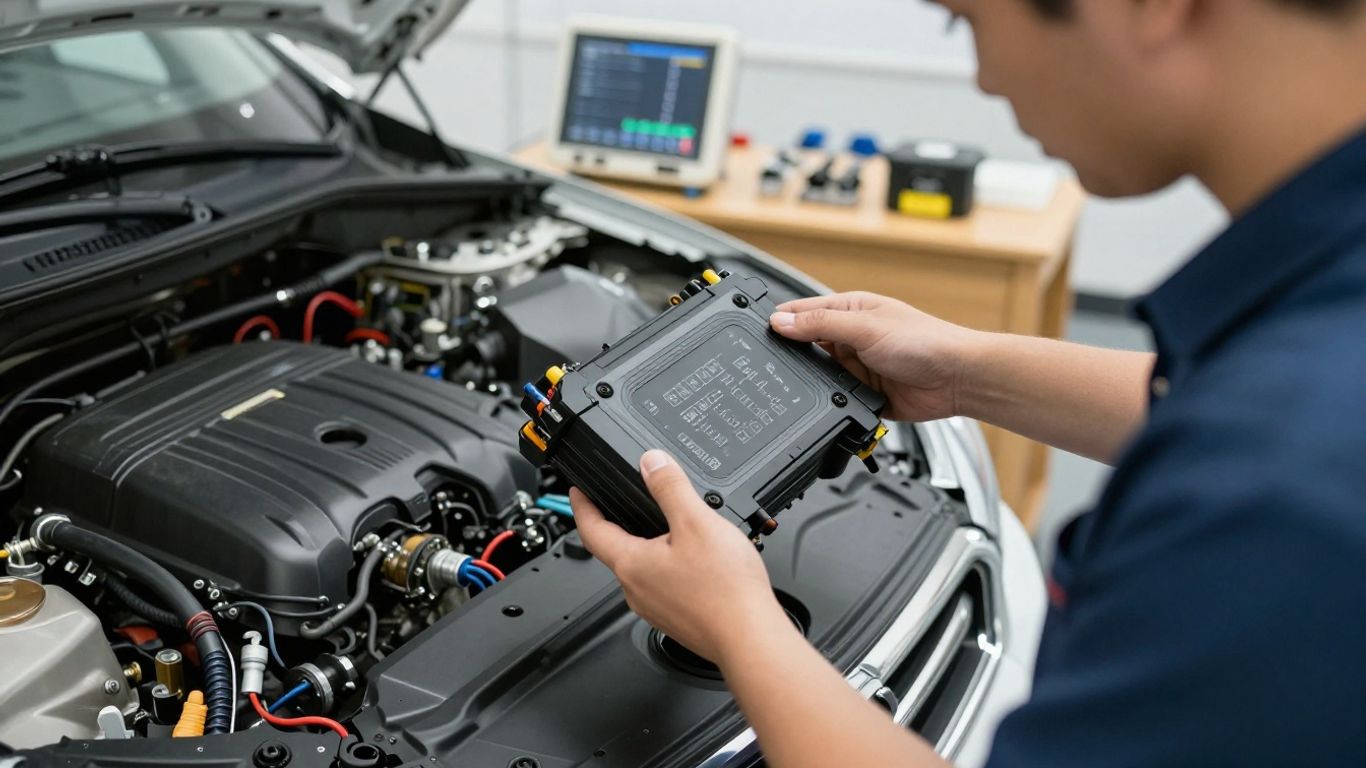
There is no single national price for this repair. General estimates often place a complete replacement for many vehicles around $500 to $2,500, while luxury and performance applications can exceed $3,000. Treat these figures as planning ranges rather than a promise for a particular car.
Costs for economy and mainstream vehicles
For a common compact car or family sedan, the total may be toward the lower or middle part of the broad range when the module is accessible and programming is simple. A repaired original or suitable remanufactured unit may reduce the parts portion. Diagnostic charges still apply if the cause of the stall has not been established.
A written estimate should separate the module, labor, diagnostic work, taxes, and programming. That makes it easier to see whether two shops are actually quoting comparable repairs.
Luxury, performance, and imported vehicle costs
Luxury, performance, and less common imported vehicles can cost more because their modules, software, and security systems may be less widely available. Dealer procedures may be required, and a replacement can involve additional initialization or network setup. Some vehicles also use several related control modules, making the diagnosis more involved.
Do not assume a higher estimate proves a shop is overcharging. Compare the proposed part, programming method, warranty, and diagnostic evidence before comparing only the total.
Dealer pricing versus independent repair shops
Dealers often have direct access to factory software and vehicle-specific procedures, which can be valuable for a security-paired module. Independent shops may offer lower labor rates or broader sourcing choices, particularly when they regularly service the vehicle’s platform. The better choice depends on the fault and the shop’s equipment.
When requesting estimates, ask both shops to state whether the ECU is new, remanufactured, used, or repaired. Acura ECU replacement information illustrates why model-specific pricing can matter, but it should not be treated as a quote for every Acura vehicle.
Additional charges for towing and related repairs
A car that stalls repeatedly may need towing, battery testing, or repairs to the wiring, fuse box, or connector that caused the failure. Those items may not be included in an ECU estimate. A shop may also charge for a post-repair scan, road test, or required relearn procedure.
Before authorizing work, ask for the maximum expected total and the conditions that could raise it. That conversation is especially useful when the vehicle is stranded away from the repair facility.
ECU repair and replacement options
Once the diagnosis is confirmed, the owner usually has several paths. The right one depends on the internal damage, the vehicle’s age, part availability, and the consequences of a repeat failure. A lower upfront price is worthwhile only if compatibility and support are adequate.
When ECU repair may be more affordable
Repairing the original unit can make sense when the problem involves a known component failure, damaged solder joint, or repairable power circuit. It also preserves the module’s existing vehicle configuration in some cases. The repair provider should explain what was tested, what was replaced, and how the unit was verified.
Repair is not appropriate for every failure. Severe corrosion, extensive water damage, or an unrepairable processor may make replacement more dependable. Turnaround time matters too, particularly if the vehicle is needed for work.
Advantages and risks of a remanufactured ECU
A remanufactured ECU can reduce the part cost while offering more assurance than an unknown used module, provided the supplier explains its testing and warranty. Some units are configured before shipment; others still require programming after installation. Confirm the exact vehicle compatibility before ordering.
The warranty should cover both the part and the likely replacement labor, if possible. Also ask whether a failed unit must be returned before a replacement is shipped, since that can affect how long the car remains unavailable.
Buying a used ECU from a salvage vehicle
A salvage ECU may be attractive for an older vehicle or one with limited parts availability. However, its history is usually incomplete, and the donor vehicle may have suffered flood, impact, or electrical damage. Part numbers, hardware revisions, and security pairing must all be checked.
Use a supplier that provides a return period and clear compatibility information. A low purchase price offers little value if the unit cannot be programmed or produces the same communication fault.
When a new OEM ECU is worth the expense
A new OEM module may be justified when the vehicle is newer, difficult to source parts for, or especially sensitive to calibration and network compatibility. It can also be sensible when a dependable long-term repair matters more than minimizing the initial bill. Even then, the original fault should be documented first.
A new part does not correct a shorted harness, failed sensor, or poor ground. The installation should include correcting the underlying circuit problem and completing every required programming or relearn step.
How to avoid paying for an unnecessary ECU replacement
The best protection is a clear diagnostic trail. Ask the shop to explain the symptom, the tests, the result of each test, and the reason other causes were ruled out. This is more useful than accepting a scan-code printout with no interpretation.
Questions to ask before authorizing repairs
Before signing an estimate, ask practical questions about both diagnosis and installation. You should know what is being replaced, how it will be configured, and what evidence supports the recommendation. These questions also make estimates easier to compare:
- What test proved the ECU itself failed?
- Were power, grounds, fuses, and communication circuits checked under load?
- Is the replacement new, repaired, remanufactured, or used?
- Does the quoted price include programming and immobilizer pairing?
The answers should be specific to the vehicle rather than general statements about computers causing stalls. If the shop cannot explain the test results, pause before approving a costly part.
Warning signs of an incomplete diagnosis
Be cautious when the recommendation is based only on a single sensor code, a visual inspection, or the fact that the engine stalled. Another warning sign is a shop that cannot say whether the ECU communicates with the scan tool or whether its power and grounds were tested. Replacing parts without measuring the relevant circuit can leave the original problem untouched.
A diagnosis may also be incomplete if the estimate excludes programming but describes the job as finished. Ask what symptoms should disappear after the repair and what follow-up testing will confirm the result.
Comparing estimates from multiple shops
A second estimate is most valuable when both shops receive the same information and are asked to describe their evidence. Compare the diagnostic process, part source, warranty, programming, and labor—not just the headline price. Managing repair costs is a useful general budgeting habit, even though subscription expenses are unrelated to vehicle diagnosis.
Avoid sending a shop down a false path by insisting on a particular part. Share the symptoms and repair history, then ask for a written recommendation. That gives each technician a fair chance to identify a less expensive cause.
Checking warranties and programming guarantees
A warranty should state how long the part is covered, whether labor is included, and what happens if the replacement fails. It should also address programming: who pays if the unit cannot be paired, communicates incorrectly, or needs additional configuration. Keep the invoice and diagnostic report in case the repair needs follow-up.
Supplier documentation matters in other technical purchasing decisions as well; for example, Nutrivance Laboratories describes the value of batch-specific documentation for a different type of product. The broader lesson is simple: clear specifications and traceability are more useful than an attractive price alone.
Conclusion
An engine stall can be alarming, but it does not make an ECU replacement inevitable. A careful technician will test fuel, ignition, air, sensors, wiring, power, grounds, and communication before recommending a module, then explain programming and warranty costs in writing. That process is the most reliable way to control the car engine stalling ECU replacement cost while choosing a repair that lasts.
Frequently Asked Questions
Can a bad ECU cause an engine to stall?
Yes, an ECU can cause stalling when it has an internal failure or cannot properly process or send essential engine-control signals. Fuel, ignition, sensor, and wiring faults are more common possibilities and should be ruled out first.
How much does ECU replacement usually cost?
A broad installed range for many vehicles is about $500 to $2,500, but the total can be lower or higher. The part type, labor, programming, vehicle, and diagnostic work determine the final price.
Is ECU repair cheaper than replacement?
Often it can be, particularly when the original unit has a repairable circuit or component problem. Repair is not suitable for every failure, and the provider’s testing and warranty should be reviewed before choosing it.
Does a replacement ECU need programming?
Many vehicles require programming, coding, or immobilizer pairing after installation. Some preconfigured units reduce that work, but compatibility and required relearn procedures still need confirmation.
Can a bad sensor be mistaken for an ECU failure?
Yes. A failed sensor, damaged connector, shorted wire, or poor ground can create a code or symptom that appears to involve the ECU. Circuit testing is necessary to distinguish the causes.
Is a used ECU safe to buy?
A used ECU can work if its part number and configuration are compatible, but its history may be unknown. A return policy, testing information, and a clear plan for programming reduce the risk.
Should I use a dealer or an independent repair shop?
Either may be appropriate. Dealers often have factory programming access, while qualified independent shops may offer different labor rates and sourcing options. Choose the shop that can explain the diagnosis and complete the required programming.