

Key Takeaways
A used ECU can be a sensible repair, but only when the unit matches the vehicle and its history is clear.
- Confirm the ECU part number, vehicle details, engine, transmission, and drivetrain before paying.
- Treat water damage, corrosion, melted pins, and unexplained casing damage as warning signs.
- Compare the purchase price with freight, programming, installation, and possible return costs.
- Ask how the ECU was tested and whether immobiliser pairing or software configuration is needed.
- Use secure payment and keep the listing, messages, invoice, and warranty details.
Understand what an ECU does and when a used unit makes sense
An engine control unit is one of the vehicle’s central electronic controllers. It interprets information from sensors and manages engine functions such as fuel delivery, ignition, emissions-related systems, and idle behaviour, depending on the vehicle. When the unit is genuinely faulty, a replacement may restore normal operation without the expense of a new dealer-supplied part. The difficulty is that ECU symptoms often overlap with wiring, sensor, battery, and communication faults.
The role of an engine control unit
The ECU receives signals from components including the crankshaft position sensor, oxygen sensors, throttle system, and coolant temperature sensor. It processes those inputs and sends commands to actuators around the engine. Modern vehicles may also exchange data with the transmission, body control, and immobiliser systems. That means an ECU is not simply a plug-in box whose suitability can be judged by appearance alone.
Common symptoms of ECU failure
Possible signs include intermittent stalling, a no-start condition, persistent warning lights, unusual fuel control, or a scan tool that cannot communicate with the ECU. None of these symptoms proves the ECU has failed. A technician should check power supplies, grounds, fuses, network wiring, and relevant sensors before condemning an expensive electronic component.
A useful diagnosis usually includes fault-code records, live-data observations, and a comparison with known-good electrical readings. Replacing the ECU first can hide the original fault and create a second problem if the replacement needs pairing.
Used, reconditioned, and new ECU differences
A used ECU normally comes from a donor vehicle and is sold in its existing condition after whatever inspection the seller provides. A reconditioned unit has usually been opened, repaired, or tested by a specialist, although the meaning of “reconditioned” varies. A new unit may have the latest available hardware or software, but it is generally the most expensive option and may still require programming.
The right choice depends on the car’s age, value, availability of the original part, and the evidence supporting the replacement. A tested used unit with a clear warranty can be reasonable for an older vehicle, while a refurbished or new unit may make more sense when reliability and long-term support matter most.
When ECU replacement may not be the real solution
Before searching for a second hand ECU for sale Australia, establish that the ECU is actually the failed component. Water entering a harness, a weak battery, damaged grounds, a blown fuse, or a shorted actuator can produce symptoms that look electronic. Accident damage can also disturb connectors and communication wiring without harming the ECU itself.
Ask the repairer what tests led to the diagnosis. A clear explanation is more useful than a confident parts recommendation, particularly when the vehicle has multiple warning lights or has recently had wiring, flood, or collision damage.
Match the ECU to your vehicle
Compatibility is the point at which many used ECU purchases succeed or fail. Make, model, year, engine, transmission, market, and body style can all affect the correct unit. Even two vehicles that look identical may use different calibrations or immobiliser arrangements. Gather the vehicle identification number and the original ECU label before contacting a seller.
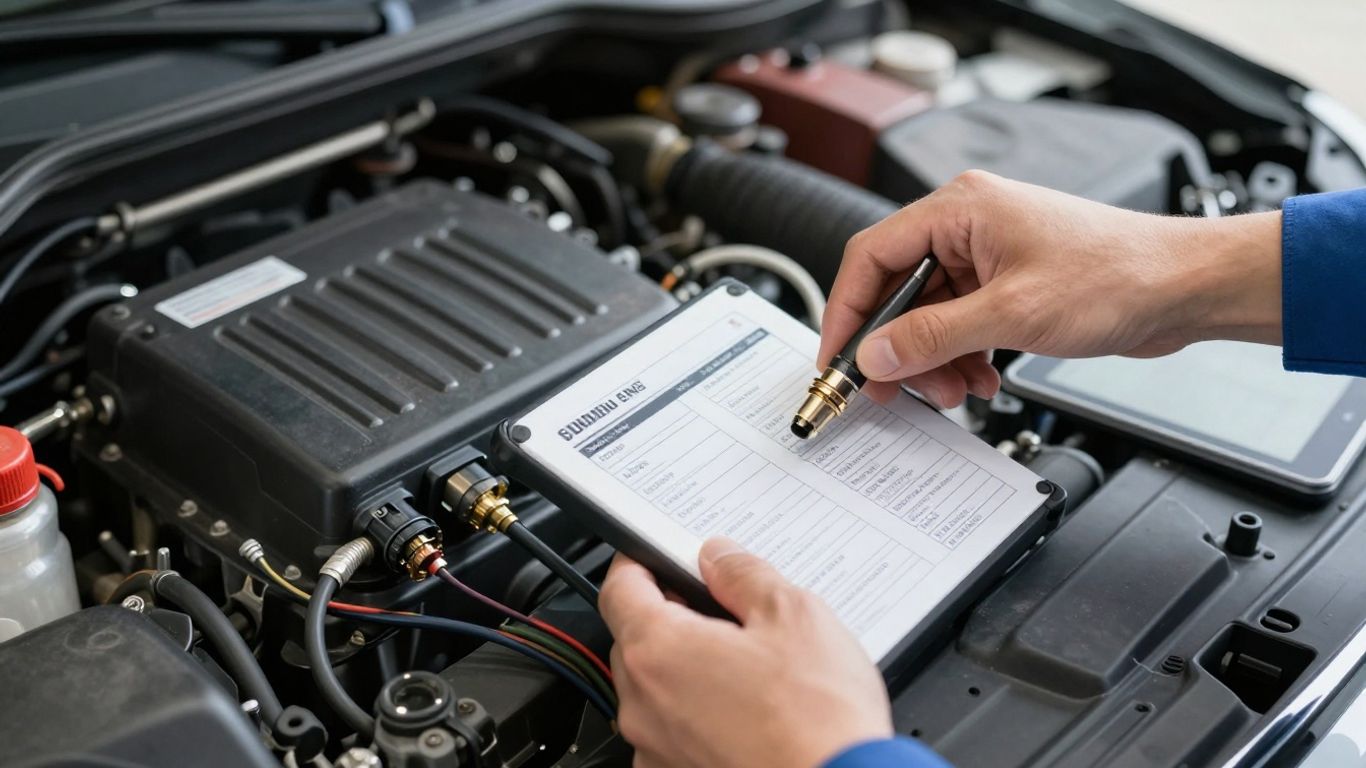
A seller that can verify fitment from the VIN is generally easier to deal with than one that relies only on a broad model description. Still, the buyer should compare the supplied information with the original component.
Checking the make, model, year, and engine
Start with the complete vehicle description rather than a shortened name. Record the build date, model variant, engine size and code, fuel type, transmission, drive layout, and whether the vehicle was sold in Australia or imported. Facelifts and mid-year production changes can introduce different control units within the same model generation.
The VIN is especially useful because it identifies the particular vehicle, but it does not always replace checking the ECU label. Send both sets of information to the seller and ask for a written confirmation of suitability before ordering.
Finding the original part number
Look for the manufacturer and supplier numbers printed on the ECU casing or label. Photograph the label clearly, including suffixes, revision letters, and barcode information. A number that differs by one digit may indicate a different calibration, connector arrangement, or vehicle application.
If the original unit is unavailable, a workshop may be able to identify the correct number from factory records or diagnostic information. Do not rely on a listing title that says only “fits many models.”
Comparing hardware and software compatibility
The replacement must have compatible hardware, including connectors, memory, communication circuits, and sensor or actuator support. It may also need software that suits the engine and vehicle configuration. A physically identical casing does not guarantee that the internal programming is appropriate.
When comparing candidates, ask whether the unit is supplied as a programmed replacement, requires cloning, or must be configured after installation. Keep the answer in writing, because the programming requirement affects both cost and your right to return an unsuitable unit.
Considering automatic, manual, and drivetrain differences
Transmission and drivetrain variations can change the ECU calibration and the messages exchanged across the vehicle network. Automatic, manual, two-wheel-drive, and all-wheel-drive versions may therefore use different part numbers even when the engine is the same.
A useful comparison also includes market specification. An imported ECU may look compatible yet communicate differently with local immobiliser or emissions systems. For a specialised application, ECU Auto parts can illustrate why an exact model and engine description matters when searching for a replacement.
Know where to find a second hand ECU for sale in Australia
There is no single best source for every vehicle. Wreckers may have broad stock and donor-vehicle information, while specialist suppliers may offer clearer testing and warranty terms. Online listings can be cheaper, but they require more careful questioning. Local technicians can also help confirm whether a particular unit is worth buying before installation.
Automotive wreckers and dismantlers
Wreckers and dismantlers often remove ECUs from vehicles that are no longer economical to repair. Ask for the donor VIN or at least the donor model, engine, transmission, and build date. Find out whether the unit was removed from a running vehicle, recovered after a collision, or simply stored with no functional test.
A supplier such as JCS Parts lists used Engine Control Units that are professionally dismantled, cleaned, and tested, with warranty and Australia-wide shipping described on its page. Those are specific supplier terms, so confirm the exact warranty and test coverage for the unit you are considering.
Online marketplaces and specialist suppliers
Online marketplaces offer a wide selection, including parts from interstate and overseas sellers. Their convenience comes with a greater risk of incomplete descriptions, reused photographs, and incorrect compatibility claims. Read the entire listing, not just the vehicle title, and compare the label in the photograph with your original unit.
A specialist guide to a used Haltech ECU discusses visual inspection, serial-number checks, and software or accessory compatibility. Those checks are particularly relevant to aftermarket units, but the broader lesson applies to any second-hand electronic component: identify exactly what is being sold and what has been verified.
Local repair shops and auto electricians
A local auto electrician can sometimes identify the correct part number, test the vehicle’s wiring, and explain the programming options before you buy. This can prevent the common mistake of purchasing a cheap ECU and discovering that the real fault is elsewhere. It may also allow you to budget for installation and pairing accurately.
Local collection can be useful when you want to inspect the casing and connectors in person. If distance is a problem, ask the repairer to review photographs and the seller’s test information before committing.
Questions to ask the seller before buying
Good questions produce specific answers. A seller should be able to explain where the unit came from, how it was tested, and what happens if it does not work in your vehicle. Before paying, ask:
- What is the exact part number and revision shown on the label?
- What were the donor vehicle’s model, engine, transmission, and build details?
- Has the unit been tested, repaired, opened, or programmed?
- Will immobiliser pairing or coding be required after installation?
The replies should match the listing and invoice. Vague answers, pressure to pay immediately, or refusal to provide label photographs are reasons to keep looking.
Inspect the ECU’s condition and history
Electronic modules can fail from moisture, heat, vibration, electrical shorts, and mishandling. A clean-looking casing does not prove that the circuit board is healthy, but visible damage can tell you when to walk away. Ask for photographs of every side, the connector area, and the identification label before the unit is shipped.
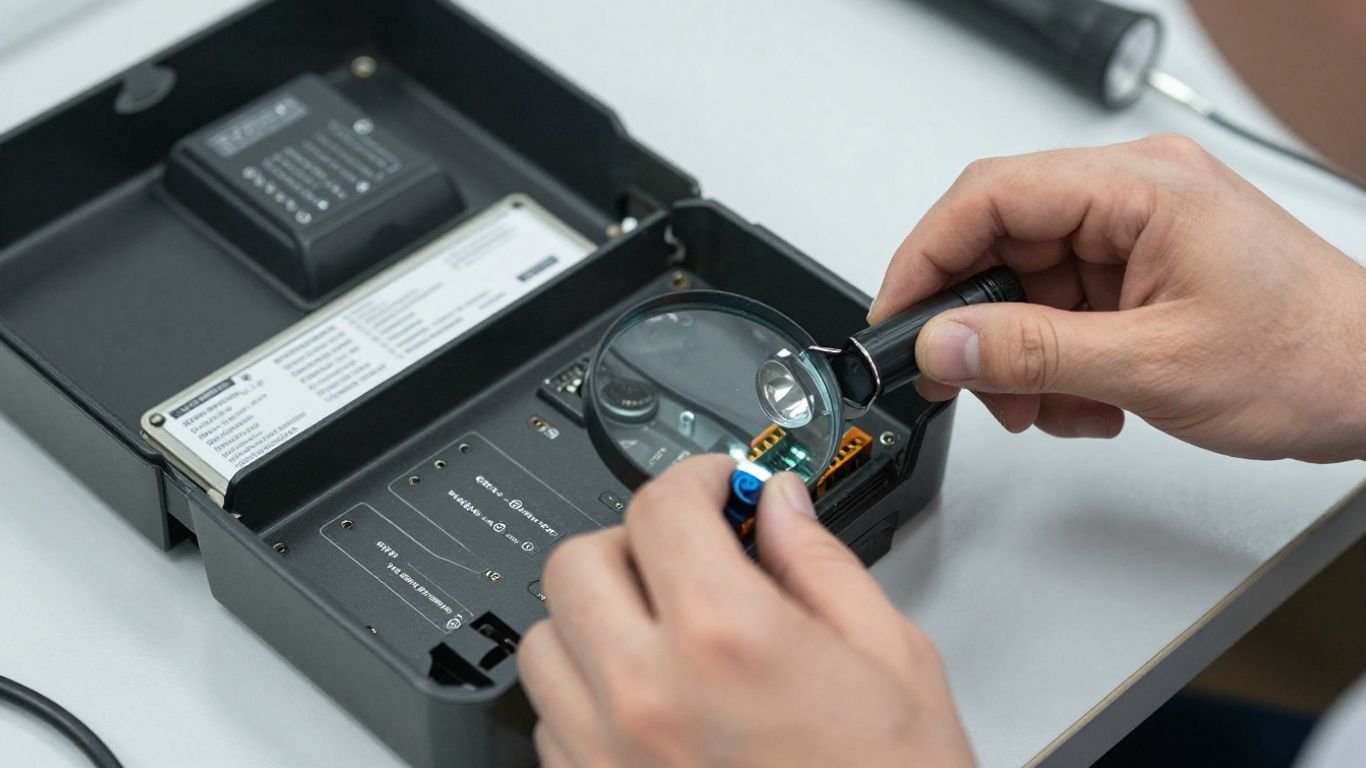
The unit’s history matters as much as its surface. A donor vehicle that suffered flood or fire damage is a very different source from one dismantled after a mechanical failure.
Signs of water, heat, and corrosion damage
Look for rust around screws, discolouration near seams, mineral residue, swollen seals, and green or white deposits around connectors. A burnt smell, warped plastic, or melted connector housing can indicate excessive heat or an electrical fault. Water damage can be hidden inside the casing, so visible cleanliness should not be treated as proof of safety.
Ask whether the donor vehicle was exposed to flooding, fire, or major collision damage. If the answer is unknown, price the part as a higher-risk purchase or choose another source.
Checking connectors, pins, and casing
Pins should be straight, clean, and firmly seated. Compare the connector shape and keying with the original ECU, and inspect the casing for cracks or missing fasteners. Scratched screw heads may suggest that the unit was opened, which is not automatically bad but should prompt questions about who worked on it and why.
Do not force a connector onto the vehicle. A mismatched or damaged plug can bend terminals and turn a replacement job into a wiring repair.
Verifying mileage and donor vehicle details
The ECU may store information associated with the donor vehicle, but the exact data varies by vehicle and module. Ask whether mileage, vehicle identification, or immobiliser information remains in the unit. Do not assume that a mileage figure in a listing is a reliable statement about the replacement ECU or the recipient car.
The donor details should be consistent with the part number and the seller’s photographs. If the history cannot be verified, have a technician decide whether the risk is acceptable.
Understanding testing and warranty claims
“Tested” can mean anything from a basic visual check to operation in a running donor vehicle. Ask what functions were tested, when the test occurred, and whether a test report is available. Also read the warranty exclusions: programming costs, labour, freight, and symptoms caused by another vehicle fault may not be covered.
A written warranty is useful only when its terms are clear. Save the listing and messages, then inspect the ECU promptly when it arrives so any claim is made within the stated period.
Calculate the total cost of a used ECU
The advertised price is only one part of the decision. A lower-cost ECU can become more expensive after freight, diagnostic time, programming, and return shipping. Estimate the complete repair before comparing suppliers. This is also where a good warranty can have practical value, rather than merely making a listing look reassuring.
Comparing purchase prices across suppliers
Compare units with similar evidence, not just similar prices. A tested part with a stated warranty should not be judged against an untested unit as though they carry the same risk. Check whether the price includes the ECU only or also includes programming, a security reset, or a returnable exchange arrangement.
A price table can make the differences easier to see:
| Cost item | Questions to ask | Why it matters |
|---|---|---|
| ECU purchase | Is the part tested and warrantied? | Indicates the initial risk and coverage |
| Freight | Is delivery tracked and insured? | Affects loss or damage exposure |
| Programming | Is pairing included or separate? | May be essential for starting the vehicle |
| Installation | Who will fit and diagnose it? | Adds labour and diagnostic time |
| Return or core | Are fees charged if it fails or is exchanged? | Changes the real final price |
Use the total, not the headline figure, when deciding between listings. A slightly more expensive unit can be better value if it includes clear testing, suitable packaging, and a workable return process.
Factoring in shipping and insurance
ECUs contain delicate electronics, so packaging and tracking deserve attention. Confirm the dispatch location, estimated delivery time, courier method, and process for reporting transit damage. For an interstate purchase, include both the outbound freight and any cost of returning a faulty unit.
Photograph the parcel and ECU when it arrives. This creates a simple record if the box is crushed, the connector is damaged, or the item differs from the listing.
Allowing for programming and installation
Programming may involve immobiliser pairing, coding, calibration transfer, or other configuration steps, depending on the vehicle. Ask a dealer or qualified auto electrician for an estimate before ordering. Labour may also include diagnosis, removal of the old unit, installation, scan-tool checks, and clearing or investigating stored faults.
Budget for the complete repair rather than treating programming as an unexpected extra. That approach makes an apparently cheap replacement easier to assess honestly.
Reviewing return policies and core charges
Some sellers require the old ECU to be returned, while others sell the replacement outright. A core charge may be refunded only when the old unit meets specific conditions, such as having an intact casing and matching part number. Read those conditions before sending anything back.
Check how long you have to test the replacement and whether it must be installed by a qualified technician. A return policy that excludes all programming or labour may still be fair, but you need to understand the exposure before buying.
Handle ECU programming and installation
A replacement ECU may fit the connector and still fail to start the car. Modern vehicles commonly use security relationships between the ECU, immobiliser, keys, and other control modules. Installation should therefore be planned as a diagnostic repair, not just a physical swap. Keep the original unit until the replacement has been tested successfully.
Why immobiliser pairing may be required
The immobiliser may expect a recognised ECU identity before it allows the engine to run. Pairing can require a scan tool, security credentials, a matching key set, or a configuration procedure specific to the vehicle. The seller should tell you whether the unit is ready for installation or whether a technician must adapt it to the car.
If the engine cranks but does not start after the swap, avoid repeated guesses. Confirm battery voltage, communication, security status, and fault codes first.
Dealer programming versus auto electrician services
A dealer may have access to manufacturer diagnostic systems and vehicle-specific programming procedures. An experienced auto electrician may offer a practical alternative, especially when the vehicle is older or the task involves testing wiring as well as configuring the ECU. Compare the service scope, not just the hourly rate.
Ask whether the quoted work includes initial diagnosis and a post-installation scan. A low installation price that excludes those steps may not be the cheapest overall.
Backup, cloning, and software configuration
Some replacement jobs involve transferring data from the original ECU, while others use a new configuration procedure. Whether cloning is possible depends on the hardware, software, security data, and condition of the original unit. Do not assume that a seller’s use of the word “clone” means the ECU will be plug-and-play.
Discuss data backup and configuration with the technician before the old ECU is discarded or opened. Preserve any original files, identification labels, and scan reports that may help with troubleshooting.
Diagnostic checks after installation
After installation, the technician should check communication with the ECU, clear or interpret fault codes, confirm sensor readings, and verify that the engine starts and runs normally. A road test may be appropriate once stationary checks are complete. Watch for warning lights, unstable idle, poor throttle response, or transmission-related faults.
A successful start is encouraging but not the only test. The vehicle should be checked under the conditions that originally produced the fault, with any remaining codes investigated rather than simply erased.
Protect yourself when buying a used ECU
A used ECU purchase is a transaction as well as a technical decision. The safest process leaves a clear trail from the listing to the part number, payment, delivery, installation, and any warranty claim. Take your time when the listing is vague or the seller is pushing for an immediate transfer.
Confirming Australian consumer protections
Consumer rights can depend on whether you buy from a business or a private seller, as well as the terms of the transaction. Read the seller’s returns, warranty, and fault-reporting conditions, and keep the invoice. If a business sells the part, ask how it handles a unit that is defective or incorrectly supplied.
For a significant purchase, check current guidance from the relevant Australian consumer agency. Do not assume that a “no returns” phrase overrides every protection that may apply to a business sale.
Avoiding counterfeit or incorrectly listed units
Compare the label, casing, connectors, and photographs with reliable references or your original ECU. Be cautious of stock images, missing serial information, inconsistent numbers, and descriptions that promise universal compatibility. A suspiciously low price can reflect an incomplete unit, a non-genuine component, or a part that has not been tested.
For specialised aftermarket electronics, serial-number and software checks may be particularly useful. For factory ECUs, the vehicle and part-number trail remains the central verification.
Paying securely and documenting the transaction
Use a payment method that provides a record and, where available, dispute mechanisms. Save the listing, seller profile, messages, invoice, tracking details, and photographs. Write the agreed part number and warranty terms into your order confirmation rather than relying on a phone conversation.
When the ECU arrives, photograph the packaging and label before installation. These small records can make an incorrect shipment or damage claim much easier to explain.
Knowing when to choose a refurbished or new ECU instead
A refurbished or new ECU may be preferable when the used market cannot provide a matching part number, the donor history is uncertain, or the vehicle is too important to risk a second attempt. It can also make sense when programming support and long-term warranty coverage outweigh the initial saving.
Choose the option that fits the diagnosis, vehicle value, and available support. A used unit is not automatically better value simply because it costs less at checkout.
Conclusion
Buying a second-hand ECU in Australia can reduce repair costs when the diagnosis is sound, the part number matches, and the seller can explain the unit’s history, testing, warranty, and programming requirements. Treat compatibility and total cost as seriously as the advertised price, and involve a qualified technician when immobiliser or network issues are likely.
Frequently Asked Questions
Is a used ECU worth buying?
It can be, particularly for an older vehicle, when the unit is correctly matched, tested, and covered by a clear warranty. The saving should be weighed against programming, installation, and return costs.
How do I know which ECU fits my car?
Compare the original ECU part number with the vehicle VIN, model, build date, engine, transmission, drivetrain, and market specification. Ask the seller to confirm compatibility in writing.
Does a replacement ECU need programming?
Many vehicles require some form of immobiliser pairing, coding, calibration transfer, or configuration. The exact procedure varies, so confirm it with a qualified technician before buying.
What damage should I avoid on a used ECU?
Avoid units showing water residue, corrosion, burnt odours, melted pins, warped plastic, cracked casings, or unexplained connector damage. Unknown flood or fire history is also a serious concern.
Should I keep the original ECU?
Yes. Keep it until the replacement has been installed, configured, and tested. The original may contain useful information or may be needed for data transfer and troubleshooting.
Can an auto electrician install a used ECU?
An auto electrician may be able to diagnose the vehicle, install the unit, perform required programming, and check communication and fault codes. Confirm the technician’s experience with your vehicle before booking.
What should a used ECU warranty cover?
Check the coverage period, testing requirements, exclusions, return freight, programming costs, and labour conditions. A warranty is most useful when the claim process and compatibility conditions are written clearly.