

Key Takeaways
Bench testing separates a suspected ECU fault from problems elsewhere in the vehicle. It can provide useful evidence before repair, replacement, cloning, or programming is authorised.
- A bench test examines the ECU under controlled power and communication conditions.
- Scan-tool fault codes alone do not prove that the ECU has failed.
- Water, heat, voltage spikes, corrosion, and intermittent faults can justify deeper testing.
- A useful report should explain findings, limitations, and sensible next steps.
- Correct refitting, coding, and post-installation verification matter as much as the test itself.
What ECU bench testing involves
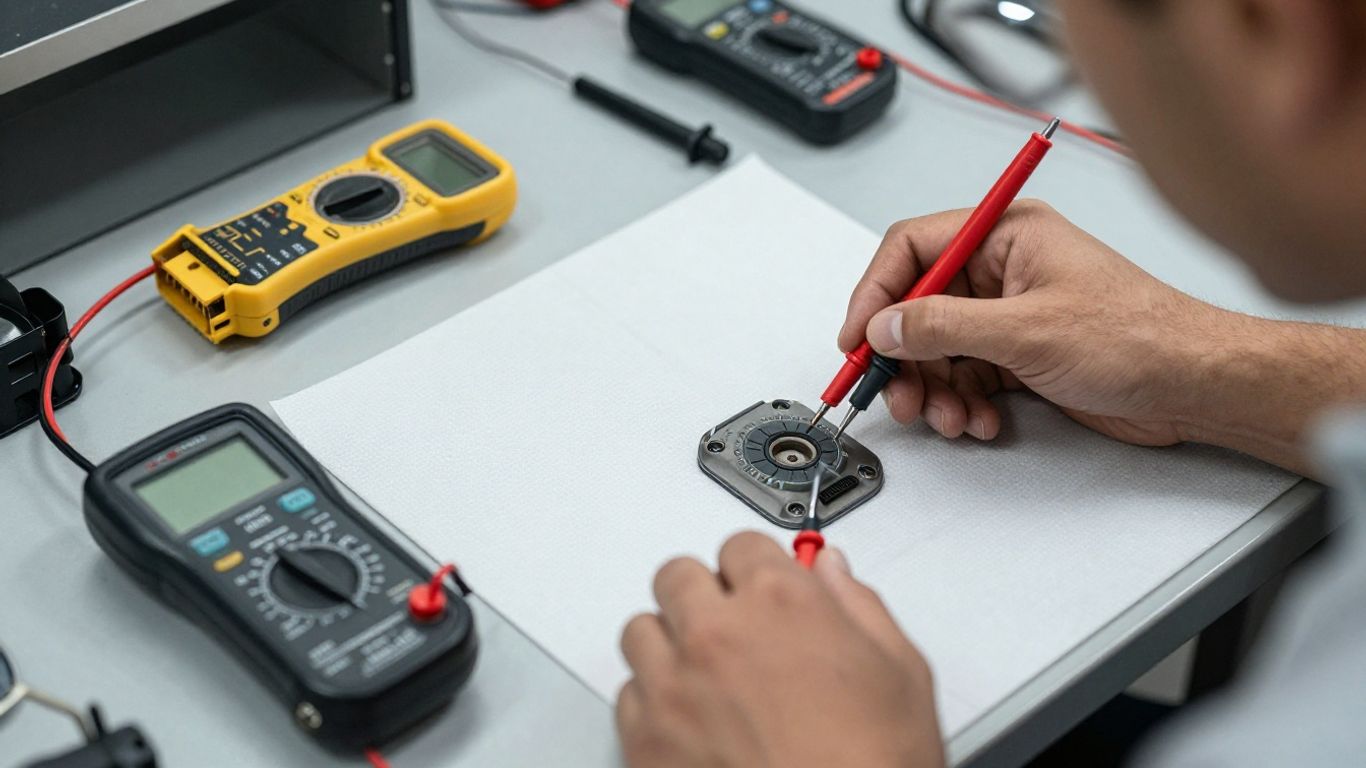
An ECU bench test removes the control unit from the vehicle and connects it to equipment that recreates relevant electrical and communication conditions. This gives a technician a more controlled way to assess the module than relying only on symptoms at the vehicle. It is not a substitute for checking the wiring, grounds, sensors, and power supplies in the car. Rather, it is one part of a careful diagnostic process.
How bench testing differs from in-vehicle diagnostics
In-vehicle diagnostics show how the whole vehicle is behaving at a particular time. A scan tool may reveal stored codes, live data, and communication status, but those results can be affected by a weak battery, damaged wiring, poor grounds, or another module on the network. Bench testing isolates the ECU and lets the technician apply known inputs while observing its responses.
That distinction is especially useful when the vehicle will not communicate, starts and stalls, or produces faults that seem unrelated. The test does not automatically identify every vehicle-side problem, but it can make the next diagnostic decision less speculative.
Which electronic control units can be tested
The exact scope depends on the test equipment, connector information, and the type of module. Engine control units are common, but testing may also apply to transmission controllers, body control modules, instrument clusters, and other electronic units when the provider has the correct technical information and connections.
A provider should confirm the ECU part number, vehicle details, engine or transmission variant, and reported symptoms before accepting the unit. Similar-looking modules can have different pinouts, software, or immobiliser relationships, so a generic connection is not enough.
Why controlled testing improves diagnostic accuracy
A controlled setup reduces variables. The technician can check whether the unit receives suitable power and ground, whether it communicates, and whether its inputs and outputs respond as expected. Results become more useful when they are compared with the vehicle symptoms and with checks completed on the vehicle itself.
The best conclusion is not always “the ECU is faulty.” Sometimes the evidence points to a wiring fault, a missing supply, a network issue, or a component connected to the ECU. Evidence before replacement can prevent an expensive part swap that does not solve the original problem.
When a bench test is more suitable than a scan
A scan is usually a sensible first step, especially when the vehicle still communicates normally. Bench testing becomes more suitable when the scan tool cannot connect, the ECU appears dead, faults remain after vehicle-side checks, or the module has visible or suspected physical damage.
A technician may also recommend testing before a replacement ECU is purchased. The result can clarify whether the original unit is repairable, whether the problem lies elsewhere, and whether programming or security matching will be required.
When your ECU may need bench testing
ECU symptoms are often shared by several systems. A no-start condition, for example, may come from fuel delivery, ignition, a crank signal, immobiliser authorisation, wiring, or the ECU itself. Bench testing is most valuable when it follows sensible preliminary checks rather than replacing the module based on one symptom.
The practical question is whether the available evidence points strongly enough toward the ECU to justify removing and testing it. Photographs, scan reports, vehicle history, and details of when the fault occurs can all help the technician interpret the result.
Symptoms that point to an ECU fault
Possible warning signs include a complete loss of communication, repeated unexplained stalling, outputs that remain inactive despite correct inputs, or a vehicle that will not start after power and ground checks have passed. Water ingress, burnt areas, corrosion, and a sharp electrical smell are also reasons to stop repeated testing and seek specialist assessment.
These symptoms are clues, not proof. A good diagnosis considers what changed immediately before the fault, whether the issue is constant or intermittent, and whether other modules report a related communication problem.
Fault codes that do not confirm ECU failure
A code naming a sensor, injector, actuator, or communication circuit usually identifies the area where the system noticed an abnormal condition. It does not necessarily identify the ECU as the failed part. Open circuits, short circuits, low battery voltage, damaged connectors, and poor grounds can all create similar reports.
Before condemning the module, compare the code with live data and perform circuit tests where appropriate. If the ECU is being sent away, include the original scan information rather than relying on a short description such as “computer fault.”
Damage caused by water, heat, voltage, or corrosion
Electronic modules can be affected by moisture, coolant, oil contamination, excessive heat, reverse polarity, jump-start events, or charging-system problems. Corrosion may continue beneath connectors or conformal coatings even after the outside of the unit looks clean.
The cause matters because repairing the module without correcting the vehicle-side source can lead to another failure. Check for blocked drains, water tracks, damaged seals, loose battery connections, and charging voltage problems before refitting a tested or repaired unit.
Situations involving immobilisers and communication faults
An immobiliser fault may prevent starting even when the engine ECU is operating correctly. Likewise, a communication fault may be caused by a CAN wiring problem, a shorted module, termination resistance, or a power supply issue elsewhere on the network.
A bench test can help establish whether the ECU powers up and communicates in isolation, but it may not reproduce every security exchange made in the vehicle. Ask in advance whether the service is test-only or also includes programming, cloning, or vehicle-specific coding.
How an ECU bench testing service works
A professional service normally begins with information gathering, then moves through connection checks, controlled simulation, measurement, and reporting. The process should be repeatable and appropriate to the specific ECU rather than based on a one-size-fits-all connection. Clear communication is useful because a test result can be limited by missing vehicle information or an incomplete fault description.
For an Australia-wide service, the process may involve carefully packaging and shipping the module. A local workshop may instead remove and refit it as part of a broader diagnostic visit. Either approach can work when the responsibilities and expected deliverables are clear.
Initial inspection and customer fault assessment
The technician should record the part number, visible condition, vehicle details, and the symptoms that led to the test. Scan reports, photographs, previous repair information, and details of water or electrical incidents can help establish a useful baseline.
An external inspection may reveal cracked housings, damaged pins, contamination, or signs that the unit has already been opened. Those observations should be separated from conclusions about internal electronic failure.
Identifying power, ground, and communication connections
Before applying power, the provider needs the correct pinout and a safe connection method. Power feeds, grounds, ignition or wake-up signals, diagnostic lines, and network connections must be identified for that particular module.
Incorrect connections can damage an ECU, so a credible service should be willing to explain how the unit is being connected and what information was used. This is one reason part-number accuracy matters when booking a test.
Recreating vehicle conditions on a test bench
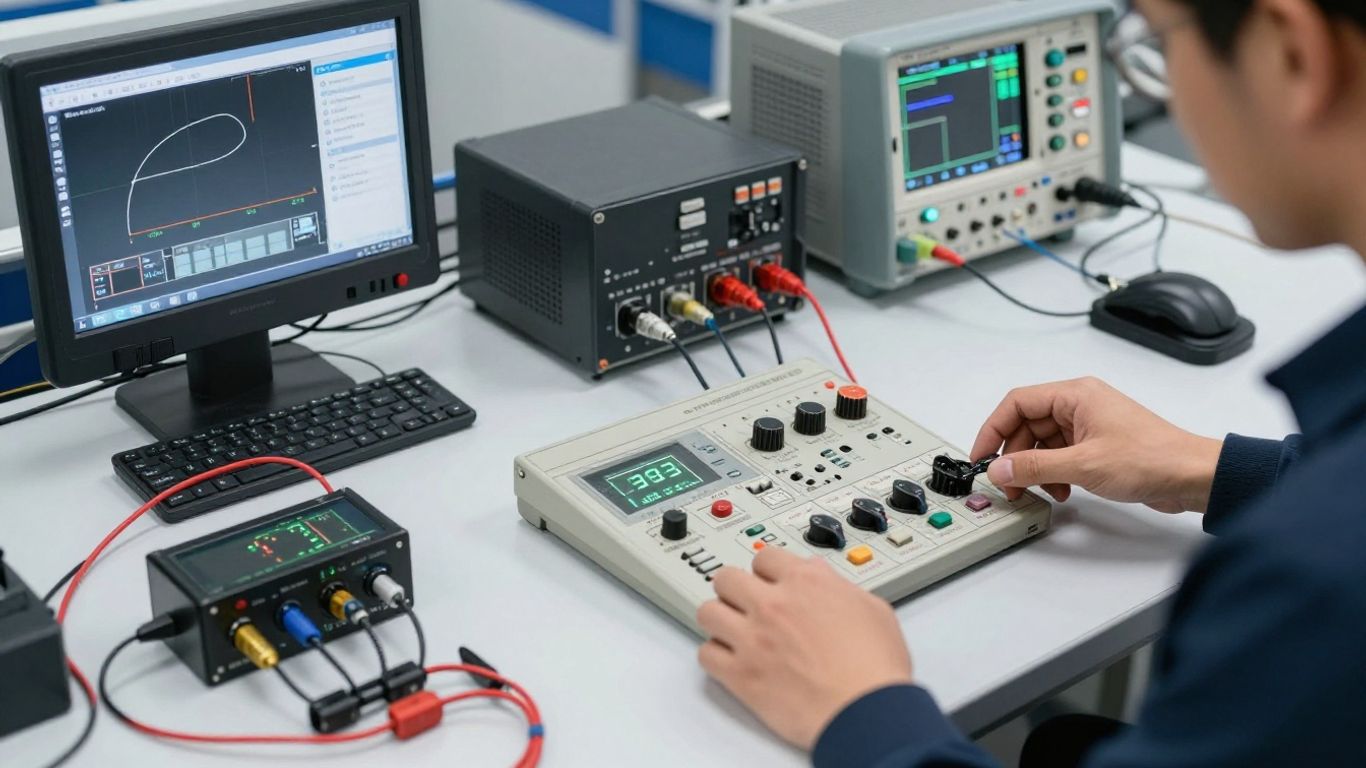
Bench equipment may provide regulated power, switching signals, network communication, and simulated inputs. The aim is to create relevant operating conditions without exposing the unit to uncontrolled vehicle faults. Not every vehicle condition can be reproduced, so the report should state what was tested and what was outside the test scope.
Where appropriate, a service may use a simulator or other diagnostic instruments to check behavior under load. A result becomes more meaningful when the technician explains how the bench conditions relate to the original complaint.
Measuring inputs, outputs, and network signals
The technician can observe whether the ECU responds to supplied inputs, produces expected outputs, and communicates over the relevant diagnostic or vehicle network. Measurements may include supply stability, reference signals, switching behavior, and communication activity.
The following sequence helps keep the work focused rather than turning it into an unexplained parts verdict:
- Confirm the ECU identity and reported vehicle symptoms.
- Check safe power, ground, wake-up, and communication connections.
- Apply relevant simulated inputs and monitor responses.
- Compare observations with vehicle-side tests and document limitations.
That sequence does not replace a vehicle diagnosis, but it creates a clearer trail from the original complaint to the recommendation. It also gives the vehicle owner something more useful than a simple “good” or “bad” label.
Documenting test results before repair or replacement
A written report should identify the unit tested, describe the test scope, record the observed fault or normal behavior, and explain the next practical option. If the result is inconclusive, that should be stated plainly. A test-only service should not be presented as a repair or as a guarantee that the vehicle will be fixed.
For context, The Automotive Clinic describes ECU testing that includes bench simulation, inspection, communication checks, a written report, and recommendations. Those are useful items to ask about when comparing any ECU bench testing service Australia provider, although each provider’s actual scope and pricing should be confirmed directly.
What a professional ECU test should cover
The right test depends on the ECU, the complaint, and the information available. Still, a professional assessment should cover the fundamentals of power, communication, inputs, outputs, and relevant software or security functions. It should also distinguish what was observed on the bench from what still needs checking in the vehicle.
A detailed scope makes it easier to compare services. It also prevents a low advertised test fee from being mistaken for a full repair, programming, and installation package.
Power supply and internal circuit checks
The first checks usually concern whether the ECU receives stable power and ground through the test setup. Internal inspection may then look for contamination, heat damage, cracked solder joints, failed components, or other circuit abnormalities, depending on the service and the unit.
External signs can guide the inspection, but an apparently clean housing does not prove that the electronics are healthy. Conversely, visible corrosion does not always indicate that every function has failed.
CAN bus, LIN bus, and diagnostic communication
Modern vehicles rely on communication between modules, and an ECU can appear faulty when the network around it is not operating correctly. Testing may examine whether the module wakes up, responds to diagnostic requests, and participates appropriately on the relevant communication lines.
The exact buses and protocols vary by vehicle. A provider should therefore confirm what communication functions are included rather than implying that every network behavior can be reproduced on every bench.
Sensor inputs, actuator outputs, and signal response
An ECU may receive simulated sensor signals and be monitored for corresponding output behavior. This can help identify an input circuit that is not being interpreted correctly or an output stage that does not respond under the test conditions.
The result still needs context. A sensor code may reflect a broken wire, and an output that works on the bench may fail under a vehicle-side load or because of a damaged harness.
Memory, software, and immobiliser-related functions
Some investigations require checking stored data, software behavior, or security-related relationships. These functions can be sensitive to the vehicle’s configuration, so test providers should explain whether they are inspecting, repairing, cloning, or programming the unit.
ECU Repair Lab lists testing, repair, remanufacturing, and programming or cloning among its service options. Those are different jobs with different risks and prices, so the requested service should be specified before work begins.
Intermittent faults and tests under changing conditions
An intermittent fault may disappear when the ECU is cool, dry, or sitting still. Where equipment and safety allow, a technician may vary temperature, load, power conditions, or simulated signals to look for changes in behavior. Not every intermittent fault can be reproduced, however.
Ask how the provider handles a unit that passes a limited test while the vehicle continues to fail. That answer can be more useful than an absolute promise that the bench result will find every problem.
Choosing an ECU bench testing service in Australia
Choosing a provider involves more than comparing a test price. You need to know whether the service suits the ECU, whether the findings will be documented, and what happens if the unit is repairable or if the fault is elsewhere. Availability, shipping, communication, and return handling matter too.
The links used while researching automotive services are not all relevant to ECU work; for example, ergonomic car accessories, an electrical self-check guide, EMF measurement guidance, Flow and Food Canberra, and Natural Escort describe unrelated services. They should not be treated as ECU testing providers. This is a useful reminder to check a page’s actual scope rather than relying on a broad search result.
Matching the provider to your vehicle and ECU type
Start with the exact ECU part number and the vehicle’s year, engine, transmission, and market specification. Ask whether the provider has experience with that module family and whether the requested test covers the reported fault.
A generic statement that “all ECUs are tested” is less helpful than a clear explanation of the specific module, connection method, and functions included. If the unit is from a diesel vehicle, for example, confirm that the provider handles that ECU type and its related communication and security requirements.
Checking equipment, technical expertise, and experience
Ask what the technician actually measures. Useful answers may refer to regulated bench power, communication testing, simulated inputs, output monitoring, circuit inspection, or controlled tests under changing conditions. You do not need a list of impressive equipment; you need to understand how it supports the diagnosis.
ECU Repair Lab presents itself as an Australian auto-electronics repair service, but any provider should be assessed against the particular ECU and service requested. Experience with one module does not automatically prove experience with another.
Reviewing test reports, warranty terms, and repair options
Before authorising work, find out whether the price includes a written report, return shipping, inspection, or a follow-up discussion. If repair is recommended, ask what warranty applies to the repair and what conditions could void it.
Some providers offer several paths after testing. Euro Car Electronics describes repair services for automotive electronic components and a six-month warranty on its work; that is a provider-specific statement, not a general industry standard. Treat warranty length, exclusions, and coverage as terms to read carefully.
Comparing local workshops with mail-in services
A local workshop can test the ECU in the vehicle and investigate wiring, grounds, and network faults at the same time. A mail-in service may be convenient when the module has already been removed or when specialist equipment is not nearby, but it may not be able to verify the complete vehicle installation.
The choice depends on the fault, the vehicle’s condition, and whether safe transport is practical. If the vehicle is immobile, ask whether removal and refitting are included or whether you will need a separate technician.
Confirming shipping, turnaround times, and return procedures
Use suitable packaging, protect connectors, and include the agreed paperwork. Confirm whether the provider wants the ECU alone, the key or immobiliser components, scan data, or other related parts. Do not send irreplaceable items without understanding why they are needed and how they will be returned.
Turnaround times can change if the unit requires additional inspection or a repair quote. Get the approval point in writing so that testing does not automatically become repair or programming without your consent.
ECU bench testing costs and service decisions
The cost of a bench test reflects the ECU type, the depth of simulation, the equipment required, and the time needed to interpret the results. Shipping, inspection, repair, programming, and urgent service may be charged separately. A low headline price is only useful when the included work is clear.
As a general comparison point, The Automotive Clinic publishes a starting price for its own Australia-wide ECU testing service. Prices and inclusions can change, so treat any published figure as a provider-specific reference rather than a universal rate.
What affects the price of a bench test
A straightforward communication and power check may take less time than a unit requiring extensive inspection, multiple simulated conditions, or intermittent-fault investigation. The vehicle information available can also affect efficiency, particularly when pinout or configuration details need to be confirmed.
Ask whether the quote includes return freight, a written report, tax, and an assessment fee if the ECU is found to be serviceable. These details make quotes easier to compare.
When testing is worthwhile before buying a replacement ECU
Testing is often worth considering when the replacement is expensive, difficult to source, security-matched, or likely to require coding. It can also prevent replacing a working ECU when the real fault is in the harness, power supply, or another module.
There are cases where the evidence already points clearly to a damaged unit and a direct repair assessment is more efficient. The sensible choice depends on the diagnostic information, not on the label attached to the part.
Understanding test-only, repair, cloning, and programming charges
Test-only work answers a diagnostic question. Repair changes or replaces faulty internal components. Cloning or programming concerns data, configuration, or compatibility, and may require information from the original unit or the vehicle. These services should appear as separate line items when more than one is needed.
A test result may recommend replacement without including the price of the replacement, installation, coding, or immobiliser pairing. Request a complete written estimate before approving the next stage.
Questions to ask before authorising the work
A short conversation can reveal whether the service matches your needs. Ask:
- What exactly is included in the test?
- Will I receive a written result and supporting observations?
- What happens if the ECU passes the bench test?
- Are repair, cloning, programming, and return freight separate charges?
The answers should leave you clear about the decision point. If the provider cannot explain what a result means for the vehicle, the test may not provide enough value on its own.
What to do after receiving the test results
A bench report is a decision aid, not the end of the diagnosis. Read the findings alongside the original scan, vehicle tests, and symptoms. If the ECU is reported as functional, return attention to wiring, power, grounds, sensors, actuators, network faults, and other modules.
If the ECU is confirmed faulty, check whether repair is practical and whether the repaired unit will retain the vehicle’s required data. Replacement may be simpler in some cases, but it can introduce compatibility, coding, and security work.
Distinguishing a confirmed ECU fault from a vehicle-side issue
Look for the evidence supporting the conclusion. A report should explain what was connected, what was measured, what failed or passed, and what the test could not reproduce. A vague statement without test scope is difficult to use when deciding on an expensive next step.
A passing bench test does not prove that the vehicle is healthy. It indicates that the ECU behaved normally under the conditions applied, which may narrow the search but does not finish it.
Deciding between repair, replacement, cloning, or programming
Repair may preserve the original module and avoid some compatibility work, but it depends on the fault and the availability of suitable components. Replacement may require configuration or security matching. Cloning and programming should be quoted separately and performed only when appropriate for the vehicle and module.
Discuss the likely result, warranty, and any follow-up coding before choosing. The cheapest individual line item may not be the lowest total cost once removal, freight, programming, and refitting are included.
Preparing the vehicle for ECU refitting
Correct the cause of the original failure first. Check battery condition, charging voltage, grounds, connector cleanliness, water entry, fuses, relays, and damaged wiring. If the old ECU failed after a voltage event or contamination, fitting another unit without those checks risks repeating the problem.
Handle the replacement or repaired module carefully and confirm that connectors, seals, and mounting points are secure. Follow the provider’s instructions rather than assuming every ECU can be connected immediately.
Completing post-installation coding and verification
After refitting, the vehicle may need coding, programming, immobiliser synchronisation, or relearning procedures. The exact steps depend on the vehicle and module. Once completed, clear relevant faults only after recording them, then verify starting, communication, live data, outputs, and a suitable road-test result.
A successful start alone is not enough if warning lights remain or communication faults return. The final verification should relate directly to the original complaint.
Keeping records for future diagnostics and warranty claims
Keep the test report, scan results, invoices, shipping details, programming information, and notes about the repair or replacement. Record the ECU part number and any software or configuration information supplied by the technician.
These records can save time if the issue returns or another workshop needs to continue the diagnosis. They also make warranty discussions more straightforward because the work and conditions are documented.
Conclusion
ECU bench testing is most useful when it answers a specific diagnostic question and is supported by vehicle-side checks. A clear test scope, written findings, and an agreed plan for repair, replacement, programming, or refitting can make the process more predictable. For Australian vehicle owners, comparing those details is more valuable than choosing a service on price alone.
Frequently Asked Questions
What is ECU bench testing?
It is the controlled testing of a removed electronic control unit using suitable power, communication, simulated inputs, and measurement equipment.
Does a fault code prove the ECU has failed?
No. Fault codes can be caused by wiring, sensors, actuators, power supplies, grounds, network problems, or another module.
How long does an ECU bench test take?
The time varies with the module, symptoms, test scope, shipping, and whether an intermittent fault or additional inspection is involved.
Can every ECU be tested on a bench?
No. Testing depends on the module, available technical information, suitable connections, and equipment capable of reproducing relevant conditions.
Should I repair or replace a faulty ECU?
The choice depends on the internal fault, compatibility, security requirements, availability, warranty, and total cost of repair, programming, and installation.
Does a bench test include programming or cloning?
Not necessarily. Test-only, repair, cloning, programming, and immobiliser-related work are separate services unless the provider explicitly includes them.
What should I send with an ECU for testing?
Follow the provider’s instructions. Usually, include accurate vehicle and part details, the fault description, scan results, and relevant history, while sending additional components only when requested and justified.