

Key Takeaways
A code scan is only one part of finding out why a warning light is on. The price makes more sense when you know what the shop will test and what happens after the results are in.
- A basic code read and a complete diagnosis are different services, so their prices are not directly comparable.
- Diagnostic fees vary with the vehicle, the time needed to reproduce the problem, the equipment involved, and local labor rates.
- Ask what testing is included, whether the fee can be applied to a repair, and whether more work needs your approval.
- A trouble code points toward a system or condition; it does not, by itself, prove that a particular part has failed.
- Save the scan results and notes about symptoms so future testing can build on what is already known.
Typical engine computer diagnostic costs
The engine computer diagnostic cost depends first on what a shop means by “diagnostic.” Some providers may read stored trouble codes as a quick service, while a repair shop may quote time for a technician to investigate the cause. Those are not equivalent jobs, even if both involve connecting a scan tool. Before comparing prices, find out what work the quoted fee covers.
Common price ranges for a diagnostic scan
A simple code read may cost little or nothing, while a professional diagnostic appointment can cost more because it may include testing beyond retrieving a code. There is no single rate that applies to every vehicle or shop, and published examples are best treated as rough reference points rather than a guarantee. A quote for a code scan should not be mistaken for the price of tracing an intermittent or complicated fault.
| Service described | What it may cover | What to clarify |
|---|---|---|
| Basic code read | Retrieving stored trouble codes | Whether the results are explained or printed |
| Initial diagnostic | Code review and preliminary checks | Which checks are included in the starting fee |
| Extended diagnosis | Further testing of a suspected system | How added labor is approved and billed |
The labels on a menu or estimate can be broad, so use the shop’s description of the actual work as your comparison point. A diagnostic fee should be tied to a defined first step, not treated as an automatic promise that every possible cause will be found for one flat amount.
When a basic code read may be free
Some parts retailers and other providers offer a basic code read at no charge. That can be a useful first clue when a warning light appears, but the service may stop after displaying the code. It generally does not establish which component caused the condition or whether the fault is still present.
Think of the code as a direction for further investigation, rather than a repair instruction. If you use a free scan, write down the code and ask what it does—and does not—tell you before buying parts or authorizing work.
Why a full diagnostic can cost more than a scan
A full diagnosis involves more than plugging in a reader. A technician may need to review vehicle data, inspect wiring or related components, reproduce a symptom, and run tests that narrow down possible causes. The time involved can be hard to predict when the problem comes and goes.
That additional work is what separates finding a code from finding a likely cause. A well-scoped test can help avoid replacing parts on a hunch, though it cannot make every difficult fault quick or simple to trace.
What the quoted price may or may not include
A quote might cover an initial period of diagnostic labor, a code scan, or a specific test. It may not include extended troubleshooting, parts, repairs, or a second visit if the symptom cannot be reproduced. Ask for the boundary of the quote in plain language, including what the shop will do if its first tests do not settle the question.
If a written estimate lists only “diagnostic,” ask for a little more detail before you approve it. A clear scope gives you a fair basis for deciding whether to proceed and makes later charges easier to understand.
What an engine computer diagnostic involves
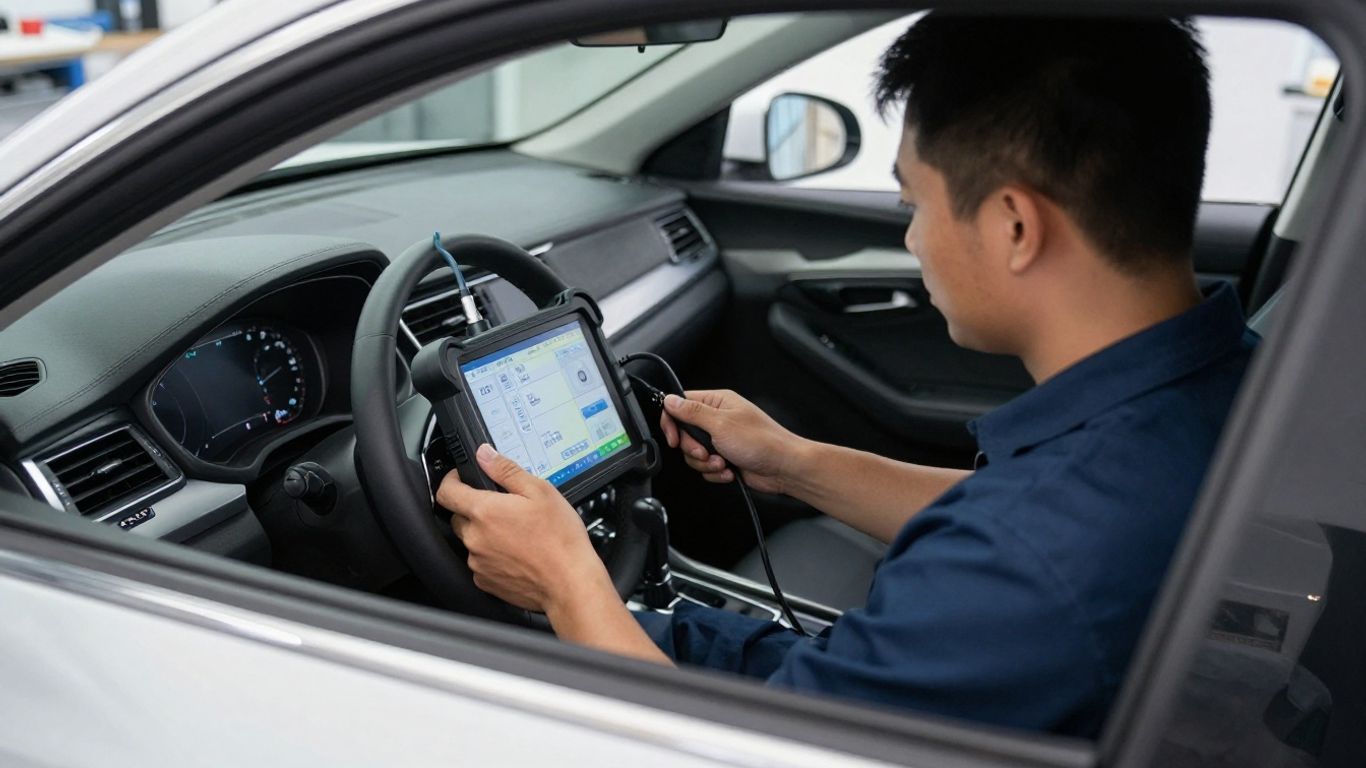
Reading trouble codes from the vehicle’s computer
A scan tool communicates with the vehicle’s computer and retrieves available trouble codes. A code can point toward a system or operating condition that needs attention, but several different faults may lead to a similar code. For that reason, the code is a starting point for diagnosis rather than a verdict about which part to replace.
The written code and its description are useful to keep, especially if you seek another opinion. Ask the technician to explain what it indicates in this specific vehicle and what additional evidence would confirm the cause.
Checking live data and freeze-frame information
A technician may look at live data to see how the vehicle’s systems are behaving during the test. Freeze-frame information, when available, records selected operating conditions around the time a fault was detected. These details can help establish whether the issue appeared under a particular set of conditions.
Data needs context: one reading in isolation may not settle the diagnosis. The value of the information is in how it compares with expected operation and with the symptoms you have noticed.
Testing components to confirm the cause
Once the initial information points toward an area, further checks can help determine whether a component, connection, or another condition is responsible. The right test depends on the code, the vehicle, and the reported symptoms. It may involve inspection or measurements rather than simply running another scan.
This is where testing before replacing parts can make a practical difference. A code that mentions a system does not automatically identify a failed component, so ask what result would confirm the proposed repair.
Distinguishing diagnosis from repair work
Diagnosis is the investigative work used to identify a likely fault; repair is the work to correct it. A diagnostic quote does not necessarily include replacement parts or labor to install them. The shop should explain its findings and provide the repair estimate separately, or clearly distinguish the two amounts on the paperwork.
A scan result can also lead to more testing rather than a definite answer. If that happens, ask what the next step is expected to establish and get approval for the added cost before the work continues.
Factors that affect the price
Two vehicles with the same warning light can need very different amounts of investigation. One fault may be clear from the initial checks; another may appear only under certain driving conditions. The quote reflects not just the code itself, but the work needed to narrow down what is causing it. A local parts network can help customers find replacement parts once a repair has been identified, but parts sourcing is separate from diagnosing the fault.
Vehicle make, model, and year
The vehicle’s make, model, and year can affect the tools and information a technician needs. Some vehicles may require equipment or procedures suited to that specific model, while access to components can also differ. Tell the shop the exact vehicle details when requesting a quote so the estimate is based on the right car.
If a shop revises its price after seeing the vehicle, ask which detail changed the expected scope. That explanation helps distinguish a legitimate adjustment from an unclear estimate.
How difficult the issue is to reproduce
A fault that is present every time the engine runs may be easier to investigate than one that appears sporadically. Intermittent problems can require more observation, a longer road test, or a return visit if the symptom does not occur during the first appointment. Describe when the issue happens, including whether it appears during startup, acceleration, or after the vehicle has been driven for a while.
The more specific your description, the less time may be spent trying to recreate the conditions from scratch. Still, an occasional fault may remain difficult to pinpoint, even with useful details.
The time and equipment needed for testing
The initial scan may take only a short time, but a diagnosis can call for additional labor and specialized testing. The quote may be a set initial fee or may cover a defined amount of technician time; the billing method matters if investigation runs longer. Ask whether the shop will contact you before exceeding the original scope.
A useful way to compare quotes is to check whether they describe the same amount of work. These examples show why a price without a testing scope is hard to interpret:
- A code retrieval with a brief explanation
- An initial inspection and a defined period of diagnostic labor
- Additional testing after the first checks do not identify the cause
The lowest starting price may cover the narrowest service, while a higher quote may include more time or testing. Compare what is included rather than choosing by the first number alone.
Location and shop labor rates
Labor rates differ by region and by shop, so the same diagnostic task can carry different prices in different places. A vehicle’s specialist requirements and the shop’s available equipment may also influence the estimate. If you compare local quotes, make sure each provider is pricing a similar first stage of diagnosis.
A quote from a different type of service is not a meaningful benchmark for automotive diagnostic work. For example, garage-door safety, attic insulation, medical assistant training, health-insurance rewards, and skincare routines each involve different work and pricing. Keep comparisons within the same service and scope.
Where to get a diagnostic test

Independent repair shops
An independent repair shop may be a practical place to ask for a diagnostic appointment, particularly when you want to discuss symptoms and next steps with the people doing the work. Call ahead with the vehicle details and ask whether the quoted fee is for code retrieval or a broader diagnosis. Confirm how the shop handles additional testing if the cause is not clear at first.
A clear explanation of scope and approval is more useful than a vague promise to “check the light.” Request the findings in writing so you can refer to them if you need to plan the repair.
Dealership service departments
A dealership service department may be worth contacting when the vehicle’s make or model calls for specific procedures or equipment. Its estimate can differ from an independent shop’s, so ask which diagnostic steps are included rather than assuming the higher or lower price is automatically better. Vehicle age, symptoms, and the nature of the fault all matter.
Before booking, ask whether the initial fee covers a set amount of diagnostic time and how the department will seek approval for further investigation. This keeps the decision in your hands if the first appointment does not identify the cause.
Parts-store code-reading services
Some parts stores offer a basic code-reading service, sometimes at no charge. It may help you learn what the computer has recorded, but it is not necessarily a full diagnosis or a substitute for confirming a fault. Ask for the exact code and save it rather than treating a suggested part as a confirmed fix.
If the vehicle has drivability problems or the warning returns, a repair professional may need to test the relevant system. Use a basic reading as information to share, not as a complete repair plan.
Home code readers and mobile diagnostic tools
A home code reader can retrieve some information without a shop visit, depending on the tool and vehicle. It may be useful for recording a code or checking whether information has changed, but the reader cannot replace hands-on testing when the cause is uncertain. Tool capabilities vary, so check what your device can actually access.
A mobile diagnostic service may be another option, but clarify what it can test at your location and whether follow-up work would need to happen elsewhere. In either case, save the results and avoid clearing codes before recording them, since doing so can remove useful context.
How to evaluate a diagnostic quote
A useful quote makes clear what the shop will do first, how long that work covers, and what happens if it needs to continue. It should also separate diagnosis from repairs so you can decide on each step. When you review a quote, focus on comparable scope rather than just the total at the bottom.
Ask what tests the price covers
Ask whether the fee includes a code scan only, a preliminary inspection, a set amount of diagnostic labor, or specific tests. If your concern is an intermittent symptom, explain that at the outset and ask whether the initial appointment includes time to try to reproduce it. The answer will help you understand whether the quoted amount is likely to cover the first visit or just the opening step.
A clear description need not list every possible test in advance. It should, however, tell you what the technician plans to begin with and what would trigger a request for further authorization.
Find out whether the fee is applied to a repair
Some shops may apply some or all of the diagnostic fee toward an approved repair, while others may charge diagnosis separately. Do not assume either policy; ask how the shop handles it and whether it depends on the repair. If the fee is credited, have the terms noted on the estimate.
That detail changes how you compare two quotes, but it does not make one option automatically less expensive. Consider the diagnostic scope, the repair estimate, and any conditions attached to a credit.
Request approval before additional testing
If the first round of checks does not find the cause, the shop may recommend more time or a different test. Agree on how it will contact you and what information it will provide before any extra work begins. A simple approval process can prevent a small initial estimate from turning into an unexpected bill.
You can make that conversation specific by asking for the next test, its estimated cost, and what its result could confirm or rule out. Then decide whether you want to continue, pause, or seek another opinion.
Compare estimates without paying for duplicate scans
When comparing estimates, share any codes and diagnostic results you already have and ask whether the new shop can build on them. Avoid paying for the same basic scan twice if the information is still useful, but understand that another technician may need to repeat a check to verify the fault or observe current data. Ask why a repeat test is needed before authorizing it.
A written result can make this conversation easier. One general guide to diagnostic fee questions discusses the distinction between a basic scan and a more involved investigation; use any outside explanation as background, then confirm the actual scope and price with the shop you choose.
How to manage diagnostic costs
You cannot always control how complicated a fault is, but you can help the technician start with a better picture of the problem. Useful details include when symptoms occur, what warning lights appeared, and what work was recently done. Keep expectations realistic: good notes can make a diagnosis more focused, but they do not guarantee a quick or inexpensive result.
Share symptoms and recent repair history
Describe what you have noticed in concrete terms: when the issue began, whether it comes and goes, and what the vehicle does when it occurs. Mention recent repairs, battery work, or parts replacement, as these details may give the technician relevant context. If possible, bring the dates and paperwork rather than relying on memory.
Be candid about any changes you have made, even if you are unsure whether they matter. A useful diagnostic conversation starts with accurate information, not a guess about the repair the vehicle needs.
Address warning lights before problems worsen
A warning light is a reason to find out what the vehicle is reporting, not a diagnosis by itself. Check the owner’s manual for guidance on the specific warning and how urgently it calls for attention. If the vehicle is behaving unusually or the warning is severe, prioritize safety and contact a qualified repair professional rather than continuing to drive as normal.
Waiting can make a problem harder to assess if symptoms change or additional issues develop. An early check does not guarantee lower costs, but it can give you information sooner and help you make a more informed decision.
Avoid replacing parts based on codes alone
A code may describe a detected condition without identifying the failed part. Replacing a component based only on the code can leave the original problem unresolved and add unnecessary expense. Ask what test supports the proposed repair and whether other likely causes have been ruled out.
This is also a point where a parts supplier’s role begins only after the repair need is understood. A supplier can connect customers with used, genuine, and aftermarket parts through a car parts network, but selecting a part is not a substitute for confirming the diagnosis.
Keep diagnostic results for future repairs
Save the code printout, written findings, and any estimate you receive. Note the date, mileage, symptoms, and whether the warning light returned after the appointment. That record may save time if the vehicle needs further testing or you visit another shop.
Before approving a new scan, mention what has already been checked and share the results. A second opinion may still involve additional tests, but the previous work gives the next technician a clearer starting point.
Conclusion
A fair engine computer diagnostic cost is one tied to a clear scope of work, not just a scan-tool connection or a promise to find every possible fault at one price. Ask what the first fee covers, how added testing is approved, and what evidence supports a proposed repair. Keep the results, share useful history, and treat codes as clues to investigate rather than instructions to replace parts.
Frequently Asked Questions
How much does an engine computer diagnostic usually cost?
There is no universal price because a basic code read and a full diagnostic appointment involve different amounts of work. Ask local providers what tests and labor are included before comparing their quotes.
Is a free check-engine code scan a full diagnosis?
Usually, a basic scan retrieves codes but may not identify the cause. Further inspection or testing may be needed to determine which component or condition is responsible.
Does a diagnostic fee include repairs?
Not necessarily. The diagnostic fee generally covers investigation, while parts and repair labor may be quoted separately; confirm the shop’s policy before authorizing work.
Can a trouble code tell me which part to replace?
A code can point toward a system or condition, but it does not always prove that a specific part has failed. Testing is often needed to confirm the cause.
Why can diagnosing an intermittent problem cost more?
A symptom that appears only occasionally may take longer to reproduce and observe. The shop may need additional time or testing, so ask how extra work will be approved and billed.
Should I get a second diagnostic opinion?
A second opinion can be useful if the cause or recommended repair is unclear. Share the first shop’s written results and ask whether any repeated tests are necessary to verify the findings.
What should I bring to a diagnostic appointment?
Bring the vehicle details, a clear description of the symptoms, any recent repair history, and codes or reports from earlier scans. This information helps the technician understand what has already happened.