
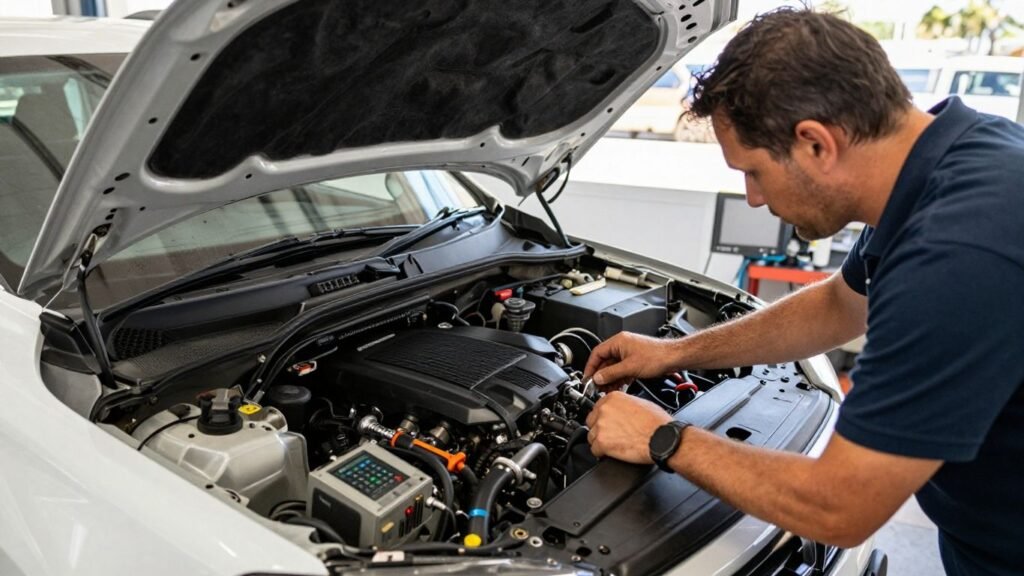
Key Takeaways
An engine computer can cause difficult-to-explain drivability problems, but many of the same symptoms come from sensors, wiring, or low voltage. A careful diagnosis is more useful than replacing the module on suspicion.
- A warning light alone does not prove the ECM has failed.
- Stalling, hard starting, misfires, and poor fuel economy deserve prompt attention.
- Battery voltage, grounds, connectors, and wiring should be checked before condemning the computer.
- Australian heat, moisture, dust, corrosion, and voltage events can contribute to electronic faults.
- Programming, immobiliser matching, and coding may be needed after replacement.
What the engine computer does in modern vehicles
The engine computer is the control centre for many systems that allow a vehicle to start, run, and meet emissions requirements. It receives information, processes it against programmed values, and commands components to respond. When the computer, its inputs, or its power supply becomes unreliable, the symptoms can spread across several systems. Understanding that relationship makes engine computer failing signs Australia easier to interpret without jumping straight to an expensive replacement.
The role of the engine control module
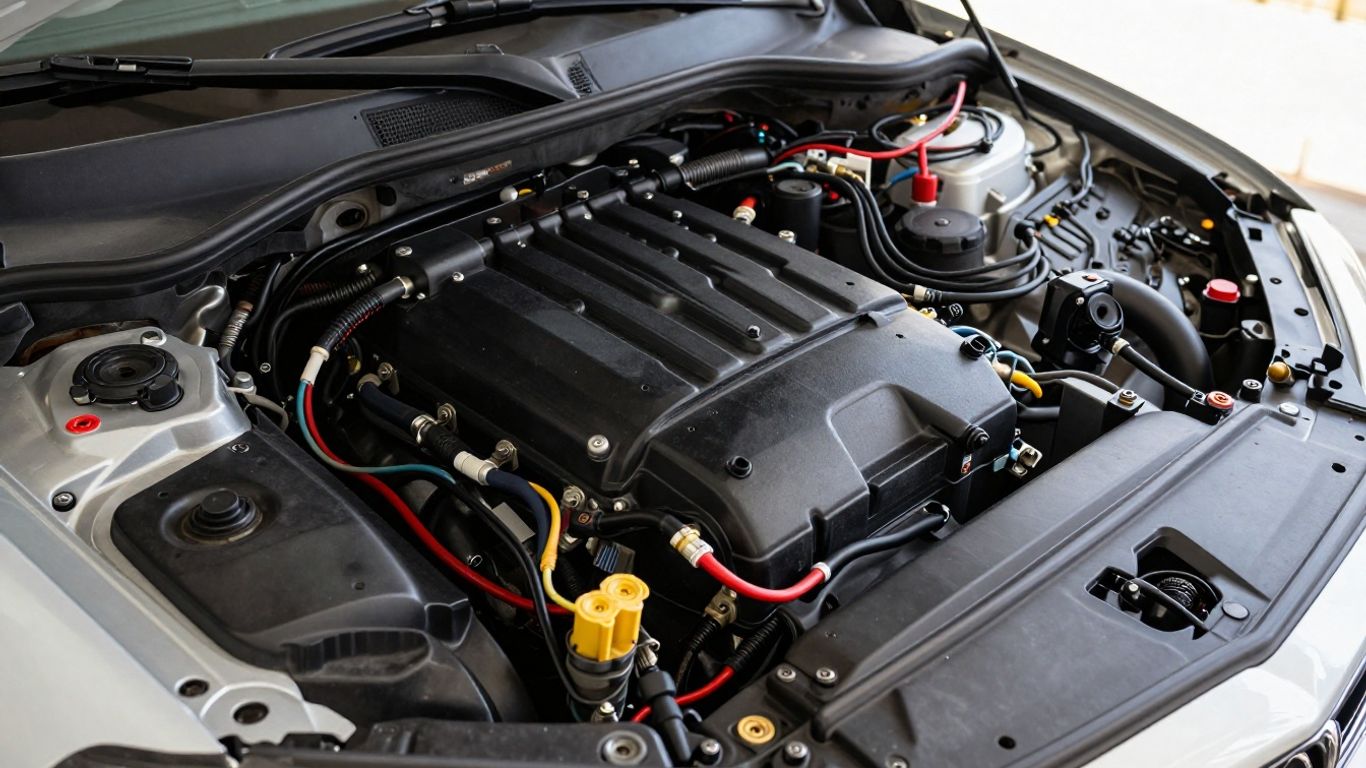
The engine control module, or ECM, manages engine functions such as fuel delivery, ignition control, idle behaviour, and emissions-related operation. It does not work in isolation: the module depends on accurate signals and stable electrical power. A fault inside the ECM may therefore look like a mechanical problem, while a fault outside it may make a healthy ECM appear defective.
How sensors and actuators work together
Sensors report conditions such as engine speed, temperature, air flow, throttle position, and oxygen content. The ECM interprets those signals and adjusts actuators, including injectors, ignition components, throttle devices, and emissions controls. A sensor that reports an impossible value can produce poor running even when the computer is doing exactly what it was designed to do.
Differences between an ECM, ECU, and PCM
These terms are often used interchangeably, although manufacturers may use them differently. ECU can mean an electronic control unit in general, ECM usually refers specifically to engine management, and PCM commonly describes a module that combines engine and transmission control. The vehicle’s service information is the best way to identify which module controls the function in question.
Why Australian driving conditions can affect engine computers
High under-bonnet temperatures, fine dust, humidity, water crossings, and flood exposure all place stress on electronic modules and their connectors. Coastal air can accelerate corrosion, while rough roads and vibration can worsen an already weak connection. These conditions do not mean an ECM will fail, but they can expose problems that would otherwise remain intermittent.
The most common engine computer failing signs
Engine computer symptoms are rarely unique to the module itself. A warning lamp, starting issue, or change in fuel use is a clue that needs context: when it happens, whether the engine is hot or cold, and what other systems are affected. A practical overview of common ECM symptoms can help you describe the problem, but it cannot replace testing.
Check engine light and warning messages
A steady check engine light may indicate a stored fault in the engine, transmission, emissions system, sensor circuit, or wiring. A flashing light is more urgent, particularly if the vehicle is shaking or misfiring. Drivers can compare the meaning of a steady or flashing check engine light, but the dashboard symbol still does not identify the failed part by itself.
Difficult starting, stalling, or intermittent shutdowns
An ECM-related fault may interfere with injector control, ignition commands, or communication with another module. The result can be extended cranking, a vehicle that starts and dies, sudden stalling, or a shutdown that disappears after the car cools down. However, fuel pressure, crankshaft sensors, immobiliser faults, and poor battery voltage can create the same pattern.
Rough idling, misfires, and poor acceleration
An unstable idle or hesitation can occur when the computer receives inconsistent information or loses control of an actuator. Misfires may feel like shaking under load, while poor acceleration can appear as a flat response to the throttle. A useful engine diagnostics service should examine live data and system operation rather than treating the symptom as proof of ECM failure.
Unusual fuel consumption or emissions
If fuel mixture control is disrupted, the vehicle may use more fuel, smell rich, hesitate, or fail an emissions test. These signs are also common with worn spark plugs, vacuum leaks, blocked injectors, exhaust leaks, or faulty oxygen and air-flow sensors. Record changes in fuel use alongside driving conditions and warning lights; that history can shorten the diagnostic process.
Transmission and electrical problems linked to the ECM
On vehicles with integrated or closely communicating control modules, an engine computer fault may be accompanied by harsh shifting, limp mode, communication warnings, or unrelated-looking electrical behaviour. Those symptoms can also originate in the transmission controller, a network fault, or a low-voltage event. The wider the symptom pattern, the more important it is to test the vehicle’s communication network instead of assuming one module is responsible.
How to distinguish computer failure from other faults
The ECM is often blamed because it sits at the centre of the control system, yet it is not the most common explanation for every electronic symptom. Good diagnosis works from the basics outward: verify the complaint, check voltage and connections, inspect inputs and outputs, then test the module. This approach prevents a costly part swap that leaves the original fault untouched.
Sensor failures that mimic ECM problems
A failed crankshaft or camshaft sensor can cause hard starting or stalling. A bad coolant-temperature, throttle-position, air-flow, or oxygen sensor can cause rough running, poor fuel economy, and warning lights. Testing the sensor’s power, ground, signal, and live-data behaviour is more informative than replacing it solely because a code mentions that circuit.
Battery, alternator, and voltage-related issues
Modern modules need clean, stable voltage. A weak battery, poor charging system, loose terminal, or bad ground can produce multiple communication and control errors, especially during starting. Measure voltage under load and during cranking, and check for voltage drop across the main power and ground paths before investigating an internal ECM fault.
Wiring, grounds, connectors, and water damage
A broken wire, backed-out terminal, contaminated connector, or corroded ground can interrupt a signal just as effectively as a failed circuit board. Look for moisture around the module, damp carpets, residue in connectors, and repairs that were taped rather than properly joined. Water intrusion should be corrected at its source, or a replacement module may fail again.
Why diagnostic trouble codes do not always identify the failed part
A trouble code generally describes the circuit or condition the computer detected, not necessarily the component that caused it. For example, a sensor-circuit code may result from the sensor, its wiring, a missing reference voltage, or a damaged driver inside the ECM. The ECM failure symptoms guide is useful background, but test results and manufacturer procedures should determine the repair.
Causes of engine computer failure in Australia
Electronic control modules are designed for demanding environments, but they still rely on enclosure seals, sound wiring, and correct voltage. Australia’s size and varied climate expose vehicles to very different stresses, from tropical humidity to desert dust and coastal salt. A failure may have one obvious cause, or several small problems that have accumulated over time.

Heat, dust, moisture, and flood exposure
Repeated heat cycles can stress solder joints and electronic components. Dust may enter through damaged seals, while moisture can travel along wiring into a connector or module housing. After flood exposure, do not assume a vehicle is safe because it starts; hidden corrosion can continue developing long after the water has gone.
Corrosion from coastal air and road conditions
Salt-laden air and water can attack terminals, grounds, and exposed wiring. Road spray, mud, and pressure washing can add moisture in places that are not intended to be wet. Corrosion often begins as an intermittent fault, so an occasional warning or stall should not be dismissed simply because the vehicle later drives normally.
Voltage spikes, jump-starting, and aftermarket accessories
Incorrect jump-starting, a failed alternator regulator, or a poorly installed accessory can expose modules to damaging voltage conditions. Additional lighting, audio equipment, trackers, and auxiliary batteries should be wired and protected correctly. When a fault appears soon after electrical work, tell the mechanic exactly what was installed or altered.
Age, vibration, and previous mechanical repairs
Age can weaken seals, connectors, and circuit-board joints, while vibration can loosen terminals or fatigue wiring. Earlier repairs may also leave pinched harnesses, stretched cables, or unsuitable splices. Keep invoices and note recent work; the timing can be an important diagnostic clue.
How mechanics diagnose a failing engine computer
Diagnosis usually combines a scan tool, electrical testing, visual inspection, and a road test. A mechanic needs to reproduce the fault where possible and compare the vehicle’s behaviour with its specified values. The aim is to prove the cause, not merely find a code that sounds serious.
Scanning for fault codes and live data
The scan provides stored, pending, and sometimes manufacturer-specific codes, along with freeze-frame information about when the fault occurred. Live data can show whether sensor readings change logically and whether commanded outputs respond. A scan is a starting point, not a verdict; clearing codes without finding the cause only removes useful evidence.
Testing power supplies, grounds, and communication networks
The technician should verify the ECM’s constant and switched power supplies, grounds, and voltage stability. Network testing can reveal lost communication between the engine computer, transmission controller, body module, and other systems. If several modules report communication errors at once, a shared power, ground, or network problem may be more likely than several failed computers.
Inspecting connectors, wiring, and signs of water intrusion
A careful inspection may reveal green corrosion, pushed-back pins, damaged insulation, rodent damage, or water tracks. Connectors should be checked without damaging their seals, and wiring should be tested under conditions that reproduce the fault. This physical work is often slower than scanning, but it can prevent an unnecessary module purchase.
Confirming the fault before replacing or reprogramming the unit
Before condemning the ECM, the technician should establish that its inputs, power, grounds, and required network messages are correct. Where appropriate, circuit tests and manufacturer procedures can confirm whether an internal driver or processor has failed. The customer should receive a clear explanation of what was tested and why the evidence points to the module.
Repair and replacement options for a faulty ECM
The correct repair depends on the fault, the vehicle, and the condition of the module. Sometimes the answer is a wiring repair or software procedure; sometimes the unit has suffered internal damage and must be replaced. Cost comparisons should include diagnosis, programming, labour, and any follow-up relearning rather than focusing only on the hardware price.
When software updates or relearning procedures may help
A software update may address a documented calibration issue, while a relearning procedure can teach the vehicle about a replacement component or restored system. These procedures are not universal fixes for damaged electronics. They should be carried out using the vehicle’s correct service information and a stable power supply.
Repairing wiring, connectors, or damaged circuit boards
If the ECM is healthy, repairing a power feed, ground, connector, or harness may restore normal operation. Specialist electronic repair may be possible when a board has a repairable component or damaged joint. A module affected by extensive water or corrosion damage may be unreliable even if it can be made to work temporarily.
Choosing between a new, used, or remanufactured computer
A new module generally offers the clearest parts history, while a used unit may be less expensive but must be compatible and adaptable to the vehicle. Remanufactured units vary in testing, warranty, and included programming. Ask whether the quoted part is supplied ready to install, and whether the old module must be retained for data transfer.
Immobiliser matching, programming, and vehicle coding requirements
Many vehicles require the replacement module to communicate with the immobiliser and other controllers. Coding may also be needed for the vehicle’s specification, while throttle, idle, or transmission adaptations may need to be relearned. The vehicle identification number, module number, and key or immobiliser details should be checked before ordering a replacement.
When to stop driving and seek professional help
Some faults can wait for a carefully arranged diagnostic appointment, while others make continued driving unsafe or risk further damage. The way the vehicle behaves matters as much as the warning light. If the engine computer failing signs Australia drivers notice include sudden loss of power or repeated stalling, arrange professional help rather than relying on guesswork.
Warning signs of an immediate safety risk
Stop driving when the check engine light flashes, the engine is misfiring badly, the vehicle loses power in traffic, or the engine repeatedly stalls. Smoke, burning smells, overheating, or fuel leaks also require immediate attention. Move to a safe location, switch off the vehicle when appropriate, and arrange roadside assistance if restarting is unsafe.
Risks of continued driving with engine control faults
Driving with a mild fault may worsen fuel use or emissions, while a severe misfire can damage the catalytic converter and a stall can leave you without normal acceleration. An unstable engine may also make merging, overtaking, or navigating intersections hazardous. Short trips should not become a substitute for diagnosis when the symptom is recurring.
What information to provide an Australian mechanic
Bring the vehicle’s make, model, engine, and approximate mileage, along with the conditions in which the fault occurs. Mention whether the engine is hot or cold, whether the warning light flashes, and whether any battery, water, accessory, or repair event happened recently. Photos of dashboard messages and a written timeline can be surprisingly helpful.
Typical questions to ask about testing, warranty, and total cost
Ask which tests confirmed the diagnosis, what alternatives were ruled out, and whether programming is included in the estimate. Also ask about the part’s source, warranty period, labour coverage, and what happens if the replacement does not solve the problem. Clear answers are a better basis for approval than a vague promise that a computer is probably faulty.
A few non-vehicle maintenance principles are also easy to find online, although they should not replace automotive advice: Vera4Beauty discusses care routines for hair bundles, George Group covers garage-door maintenance, and insurance claim checks address administrative accuracy. For broader technical context, readers may also encounter Hugging Face security coverage and Healthpath wellness information; none of those topics diagnose an ECM.
Conclusion
Engine computer failing signs Australia motorists notice can point to an ECM, but they can just as easily begin with low voltage, a sensor, damaged wiring, corrosion, or water exposure. A proper inspection and electrical diagnosis protect you from unnecessary replacement costs and help restore the vehicle safely. When symptoms include stalling, severe misfires, flashing warnings, or loss of power, stop driving and arrange professional assistance.
Frequently Asked Questions
What are the first signs of a failing engine computer?
Common clues include a persistent warning light, difficult starting, stalling, rough running, misfires, poor acceleration, unusual fuel consumption, or communication faults. None of these signs proves the ECM itself has failed.
Can a bad battery cause symptoms that look like ECM failure?
Yes. Low cranking voltage, charging faults, loose terminals, and poor grounds can create multiple warning lights and communication errors. Battery and charging tests should usually be part of the initial diagnosis.
Is it safe to drive with the check engine light on?
A steady light with normal vehicle behaviour may allow a short trip to a repairer, but it should be checked promptly. A flashing light, severe shaking, overheating, smoke, or loss of power calls for stopping as soon as it is safe.
How do mechanics confirm an ECM is faulty?
They compare fault codes and live data with specified values, then test power, grounds, wiring, connectors, network communication, and related sensors. The ECM should be replaced only when those checks support an internal module fault.
Can an ECM be repaired instead of replaced?
Sometimes. Wiring and connector faults can often be repaired, and some circuit-board damage may be suitable for specialist electronic repair. Severe corrosion, water damage, or processor failure may make replacement the more reliable option.
Does a replacement ECM need programming?
Many vehicles require programming, immobiliser matching, coding, or relearning after an ECM replacement. Requirements vary by vehicle, so compatibility and programming costs should be confirmed before the part is ordered.
How much does engine computer repair cost in Australia?
The total depends on diagnosis time, wiring repairs, module type, programming, labour, and warranty. A written estimate that separates those items gives a more useful comparison than the module price alone.